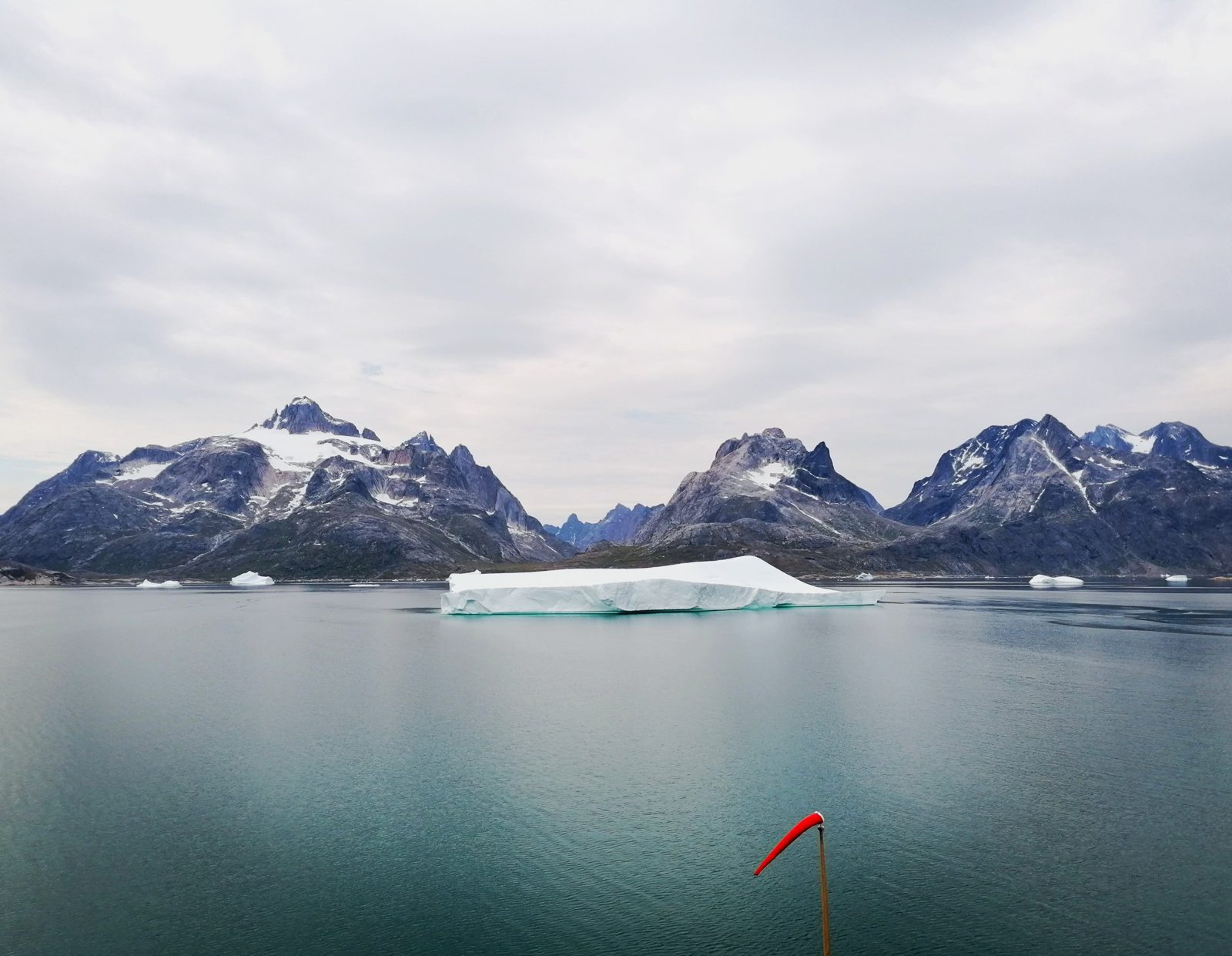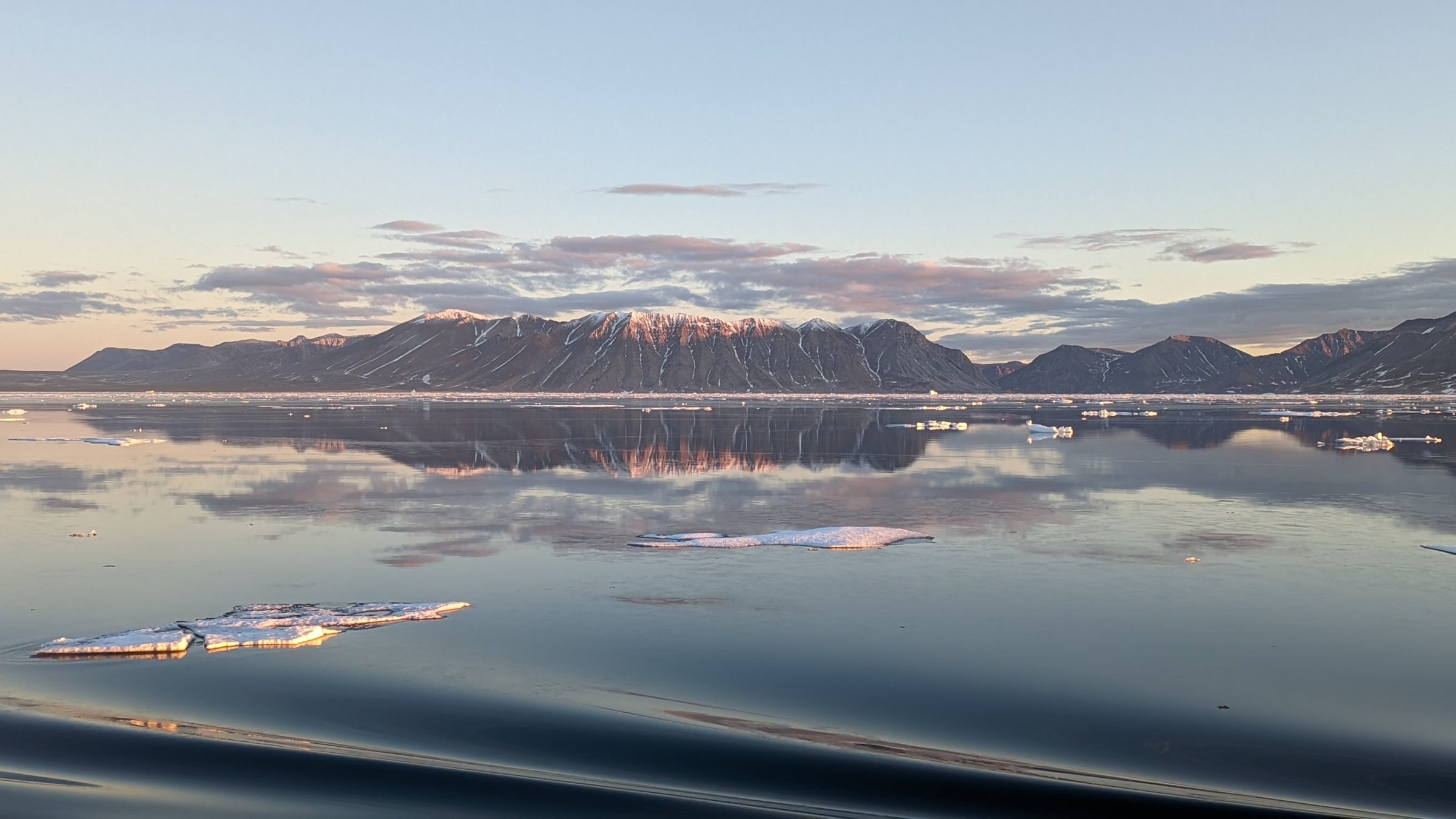

Arctic mountains at sunset reflected in calm water with scattered sea ice

Marine benthic ecology · Åbo Akademi University

Phoebe Armitage, PhD

Post-doctoral researcher studying life on the seafloor, and what a changing climate means for how it functions.

Trait-based ecology · Benthic–pelagic coupling · Arctic ecosystems
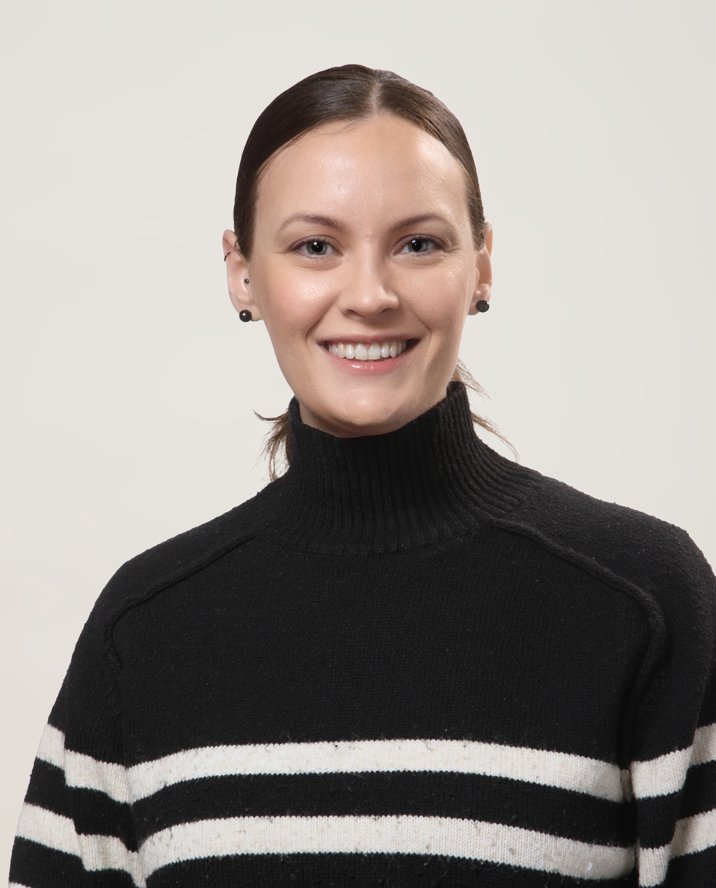
Portrait of Phoebe Armitage

01 · About me

The seafloor: biology, ecology and more...

I study how seafloor communities respond to their environment, and how those responses shape the way marine ecosystems function. My work so far has centred on Arctic fjords and shelves, combining field data, environmental measurements and ecological analysis. I am particularly interested in organisms' traits, their behaviour, and how food and carbon move through the ocean to support life on the seafloor, and in what changing conditions mean for environments from the coast to the deep sea.

3Arctic expeditions
4Peer-reviewed papers
4Projects
7+Years in research
Download CV (PDF)

02 · Research · Projects

Research projects, past and present

Digital Waters logo2026 to nowGlobal review · ClimateDIWA project, Finland

Annual sea ice and its negative impact on seafloor communities by scour

Annual sea ice forms every year in the northern and southern parts of the planet, yet the impact it has on biological communities living at the seafloor when it breaks down and melts is unknown. Here I take a global perspective to understand these mechanisms further.


SEA-Quester logo2022 to 2026Traits · CarbonSEA-Quester · EU Horizon Europe · Grant agreement No. 101136480

How seafloor animals share the carbon that reaches them

A community at the seafloor relies on a healthy supply of organic carbon to stay rich in the functions that ultimately provide regional and global ecosystem services. Here we look at Northeast Greenland, relating the functional composition of seafloor species to carbon.

ECOTIP logo2021 to 2025Shelf · FjordsECOTIP · EU Horizon 2020 · Grant agreement No. 869383

Greenland's seafloor invertebrates: who is doing what?

Quantifying taxonomic composition and trait composition in and around Greenland.

SOTEAG logo2020LONG-TERM CHANGE · FUNCTIONAL REDUNDANCYMSc thesis with SOTEAG · University of St Andrews

Three decades of change in a coastal seafloor community

A 32-year trait analysis of benthic community dynamics, and its application for monitoring marine ecosystem health.

03 · Papers · Academic Research

A glimpse into my research

Each paper comes with a short animated sketch of its central idea, drawn for readers outside the field. Swipe or use the arrows to move through them, newest first.

SURFACE PRODUCTION SINKING CARBON SILL FILTER FEEDERS DEPOSIT FEEDERS PREDATORS / SCAVENGERS MIXED FEEDERS

01 / 05

2026 · Preprint, under review at Biogeosciences

From surface flux to seafloor function: vertical carbon export and benthic communities in high-latitude coastal systems

We look at how carbon is partitioned between seafloor animals with different traits, and whether that is related to the downward flux of organic matter or to the organic carbon in the sediment.

Armitage, P., Nordström, M.C., Svensen, C., Oleszczuk, B., Legeżyńska, J., Włodarska-Kowalczuk, M., Törnroos, A.

PREDATORS CONSUMERS FOOD SOURCES NORTHEAST GREENLAND SEAFLOOR

02 / 05

2026 · Marine Environmental Research

Epibenthic food web structure across the Northeast Greenland seascape

Who eats whom among the animals living on the seabed, and how that food web is structured across the Northeast Greenland seascape.

Nordström, M.C., Zhulay, I., Armitage, P., Norrbin, F., Bonsdorff, E., Christiansen, J.S., Bluhm, B.A.

ICE-COVERED NORTH ICE-FREE SOUTH POLAR WATER ATLANTIC WATER COLOUR = SPECIES · SHAPE = TRAIT

03 / 05

2026 · Diversity and Distributions

Biogeographic diversity meets functional similarity: trait convergence in benthic infauna from the Arctic ice-covered North to ice-free South

From the ice-covered north to the ice-free south, the species living in the sediment change, yet the biological traits, and therefore function, stay much the same.

Armitage, P., Nordström, M.C., Oleszczuk, B., Legeżyńska, J., Włodarska-Kowalczuk, M., Törnroos, A.

SEA ICE SEA ICE RESEARCH SHIP FJORD SHELF SLOPE FOOD FROM THE WATER MIXING THE SEDIMENT

04 / 05

2025 · Estuarine, Coastal and Shelf Science

Diverging benthic trait diversity and drivers across fjord to slope habitats of the high Arctic

From fjord to shelf to slope in the high Arctic, seafloor communities differ in the traits they exhibit, and in what drives them.

Armitage, P., Törnroos, A., Fredriksen, R., Bluhm, B.A., Weigel, B., Bonsdorff, E., Christiansen, J.S., Nordström, M.C.

32 YEARS → TEMPERATURE FUNCTIONING ABUNDANCE DIVERSITY WARM-WATER SPECIES

05 / 05

2024 · Global Change Biology

Multidecadal changes in coastal benthic species composition and ecosystem functioning occur independently of temperature-driven community shifts

Over 32 years the water warmed, the animals became more abundant and the way the ecosystem functions changed. Yet diversity stayed level and the community shifted only weakly towards warm-water species, so the change in functioning does not appear to be driven by temperature.

Armitage, P., Burrows, M.T., Rimmer, J.E.V., Blight, A.J., Paterson, D.M.

04 · Fieldwork

From the deck to the deep, to the mud

A visual log of expeditions, sampling, and the small creatures that make all of this worth the cold.

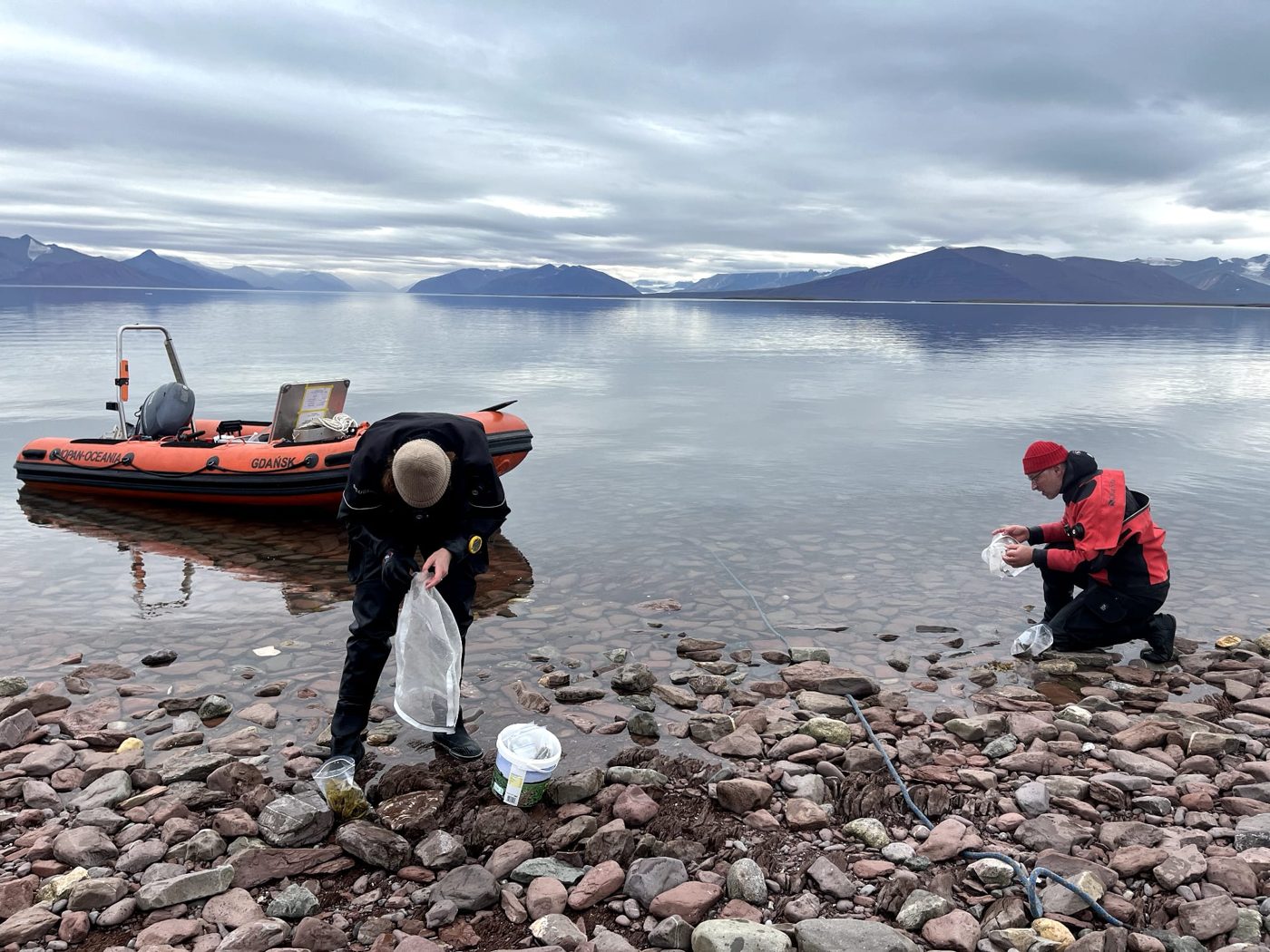
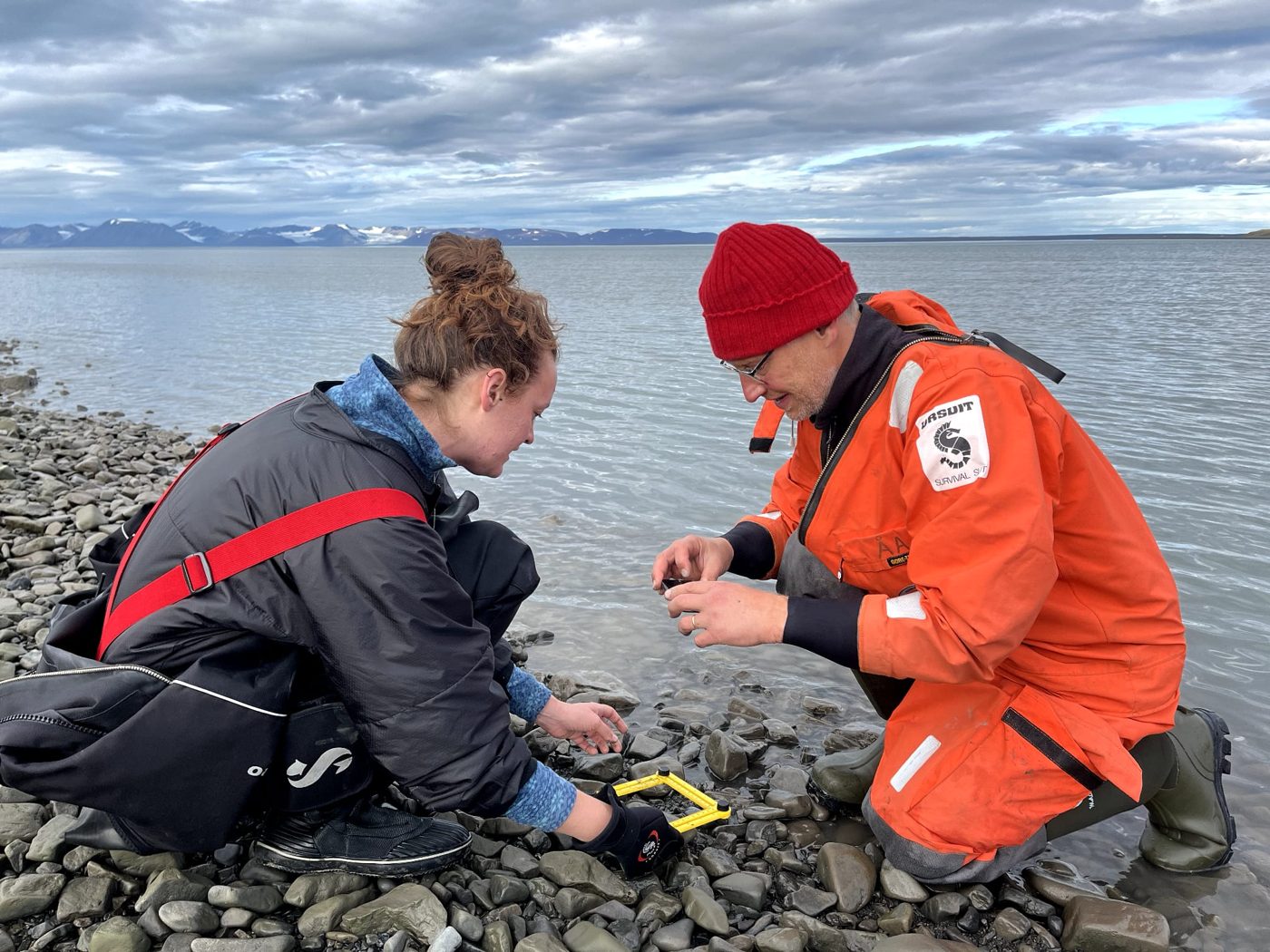
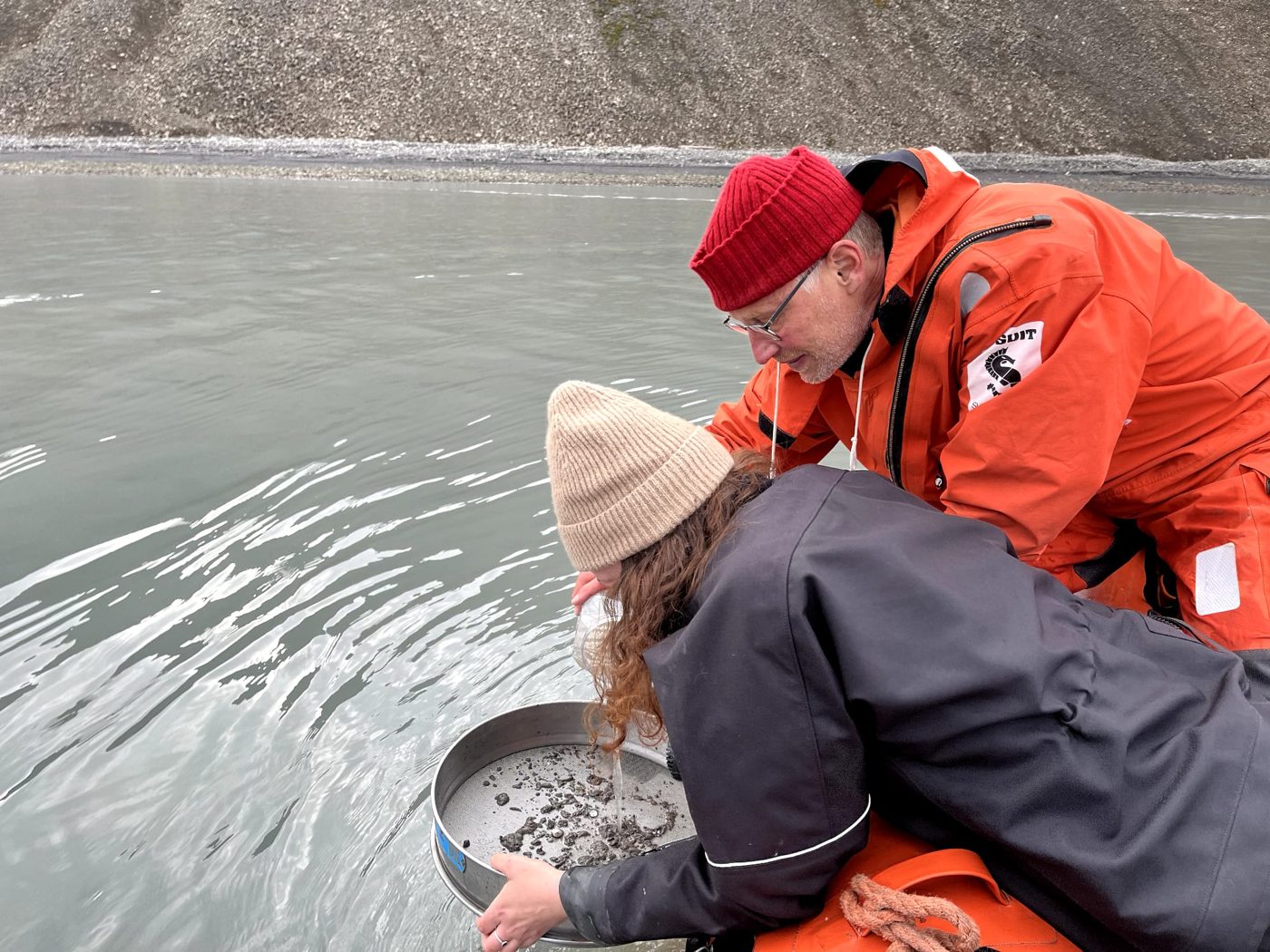
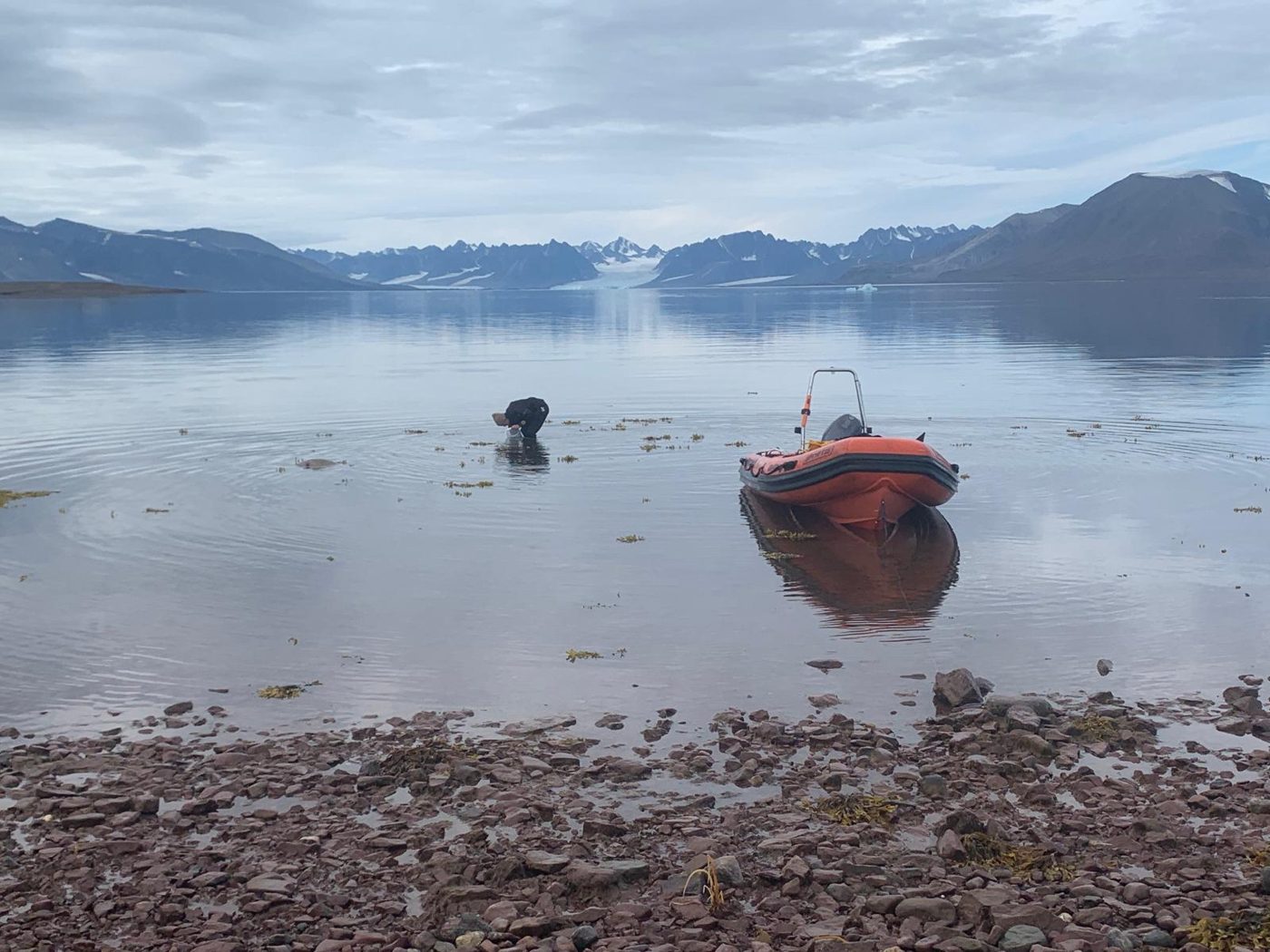
2024 Svalbard SEA-Quester cruise, R/V Oceania · grabs, traps, trawls, seabed imaging and video
Two researchers in dry suits bagging samples on a stony shore beside an orange inflatable boat
Bagging samples on the shore
Two researchers crouched at the water edge, one placing a yellow folding frame on the stones while the other photographs it
Photographing a shore quadrat
Two researchers leaning over the side of a boat, rinsing a sample through a metal sieve
Sieving a sample over the side
A researcher bending down in shallow water near an orange boat, with a glacier at the head of the fjord
Sampling the shallows below the glacier
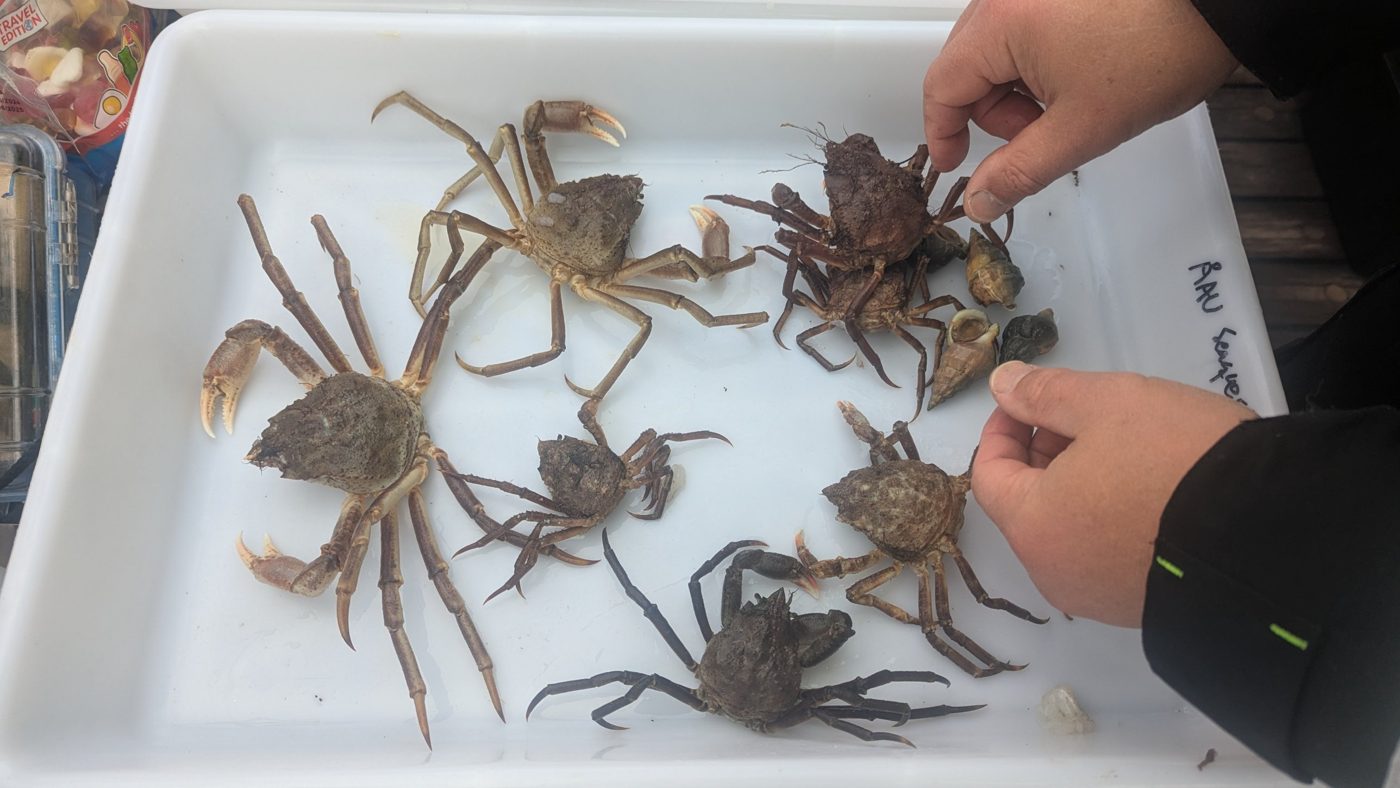
Six long-legged crabs and a few whelks laid out in a white tray
Crabs and whelks in the sorting tray
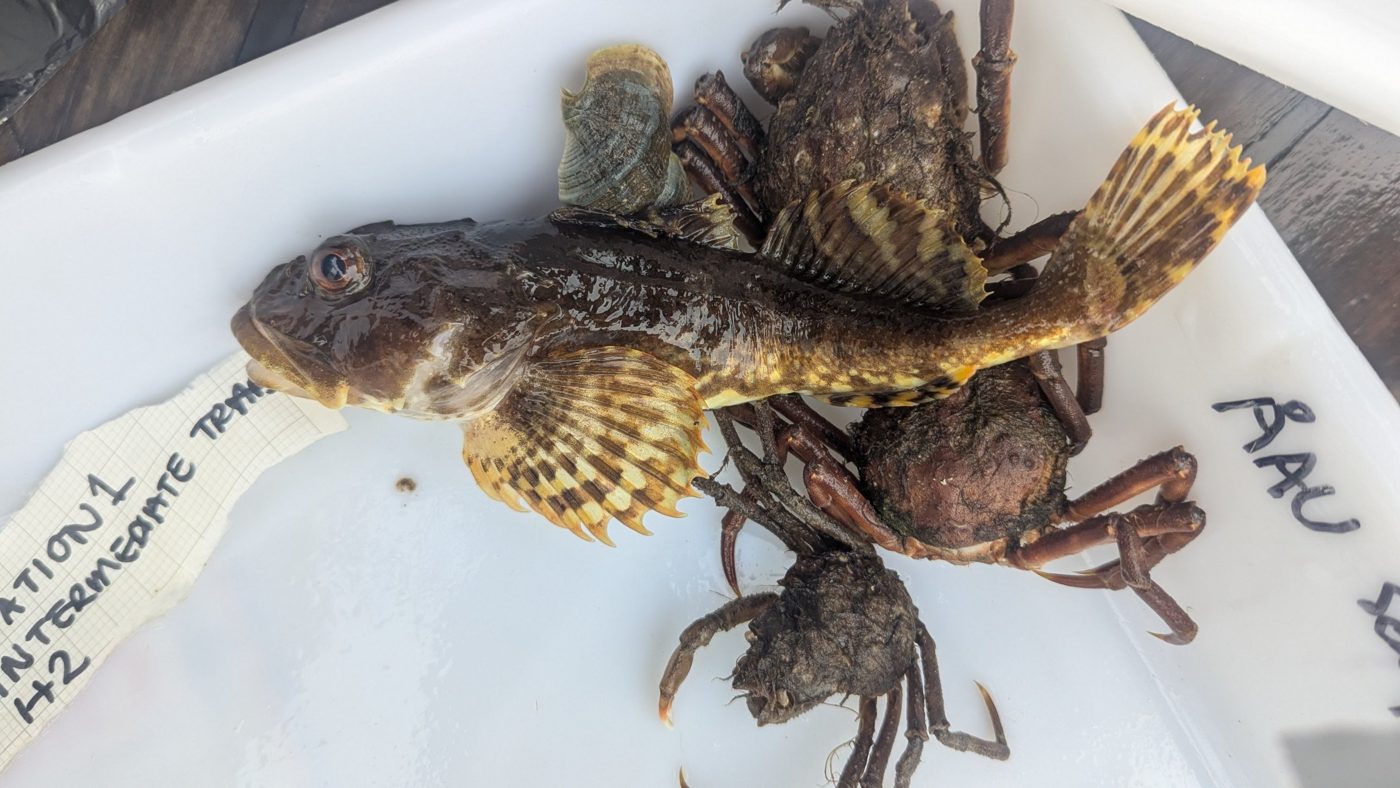
A mottled brown and yellow fish with spiny fins lying on top of crabs in a white tray
A sculpin among the crabs
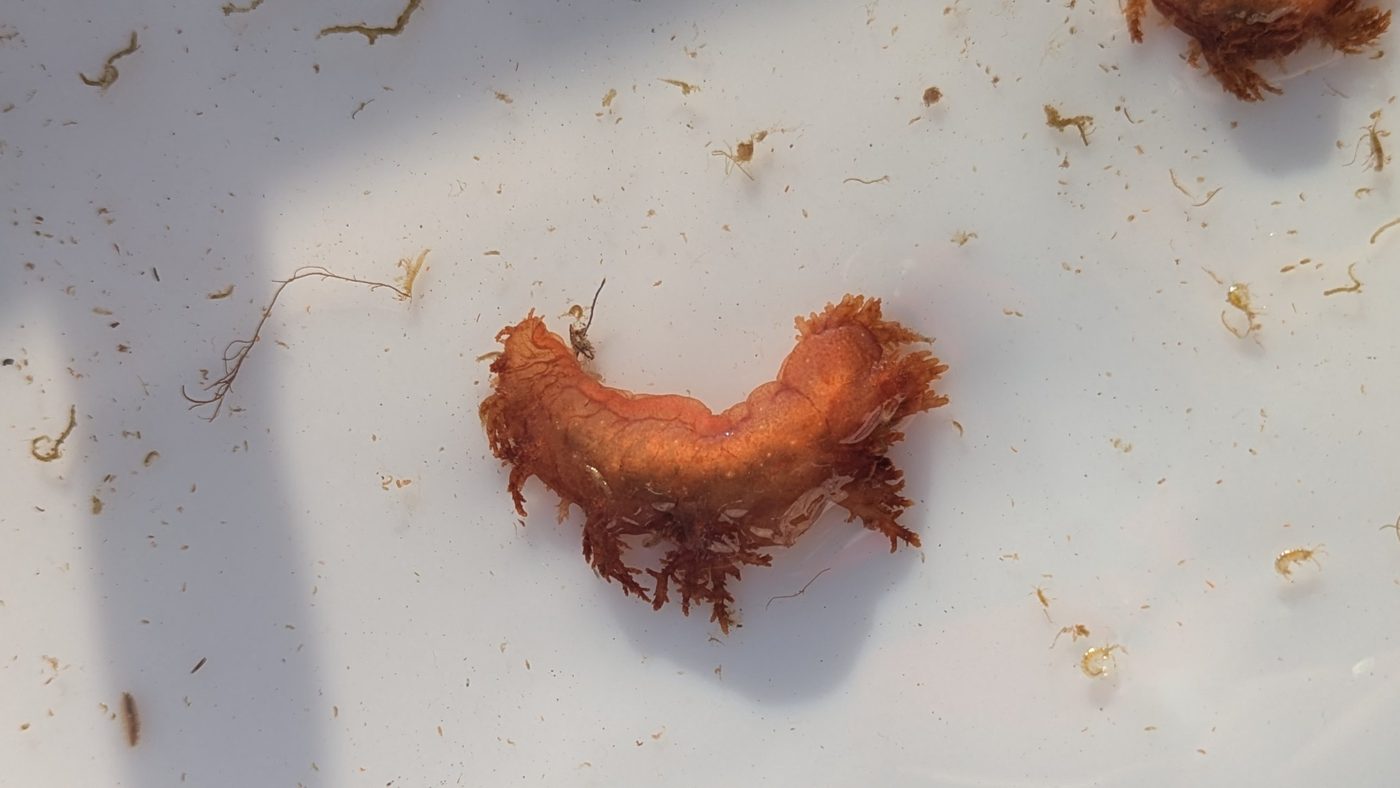
A small orange animal with frilled edges in a tray of water
Orange and frilled, from the tray
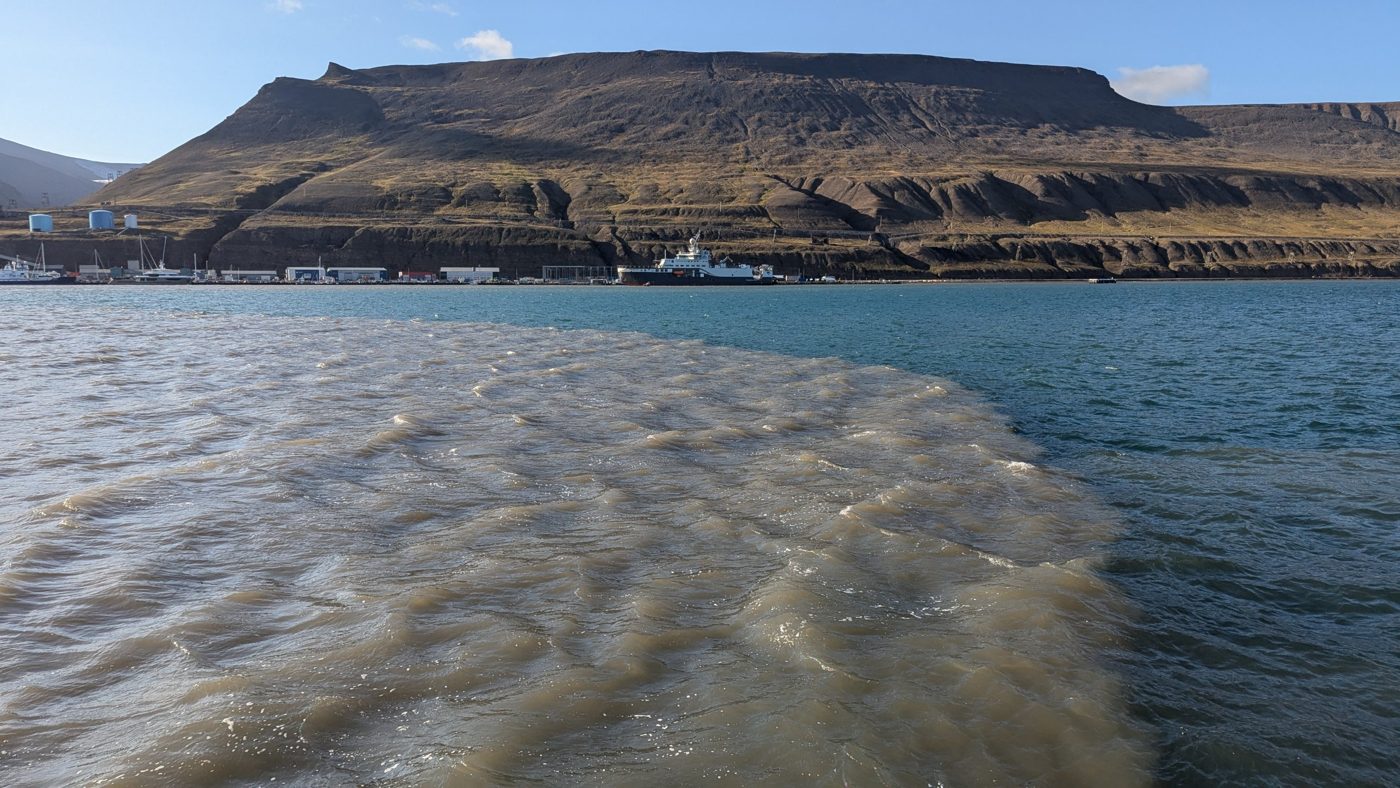
Brown sediment-laden water spreading into blue sea in front of a harbour and a flat-topped hill
River sediment meeting the fjord
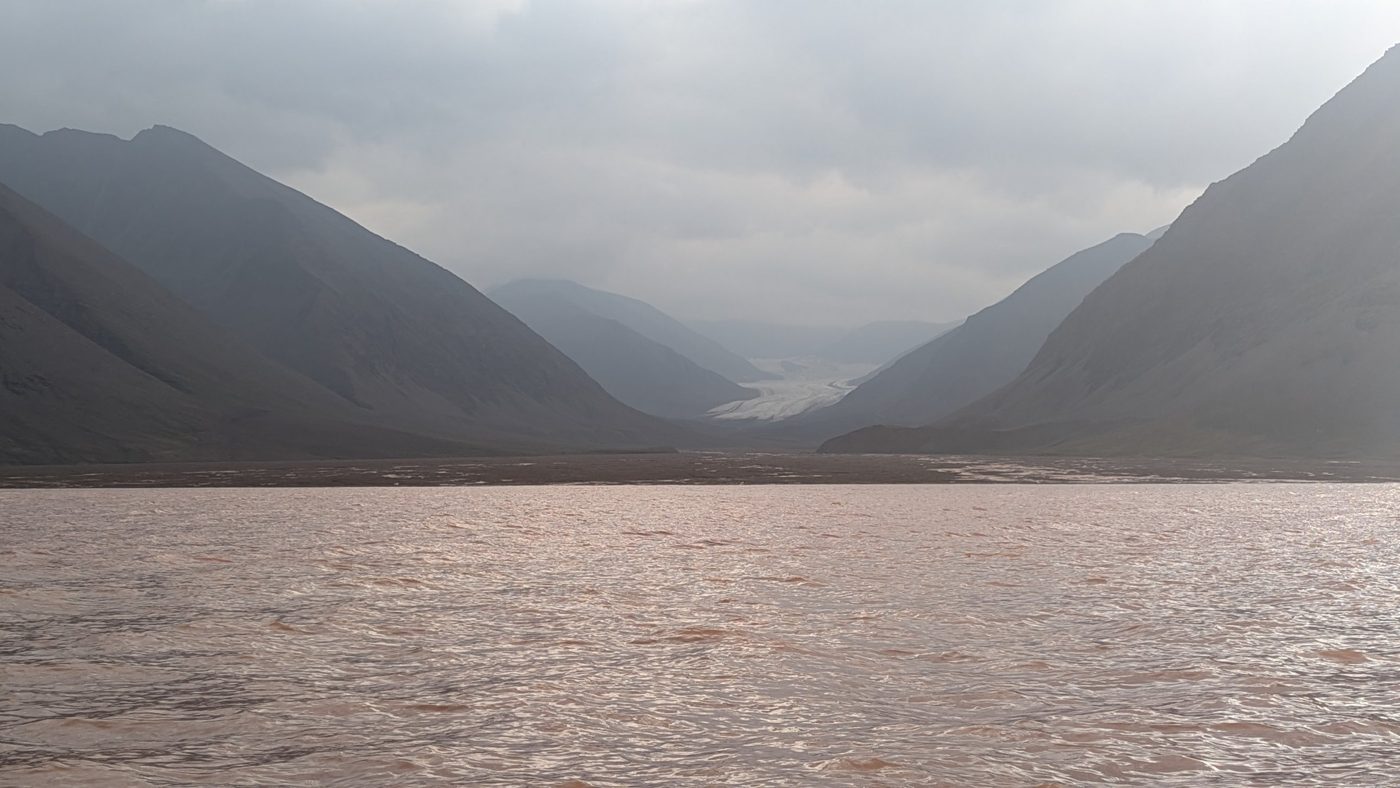
Red-brown water in front of a hazy valley with a glacier winding down between dark mountains
Meltwater colouring the fjord
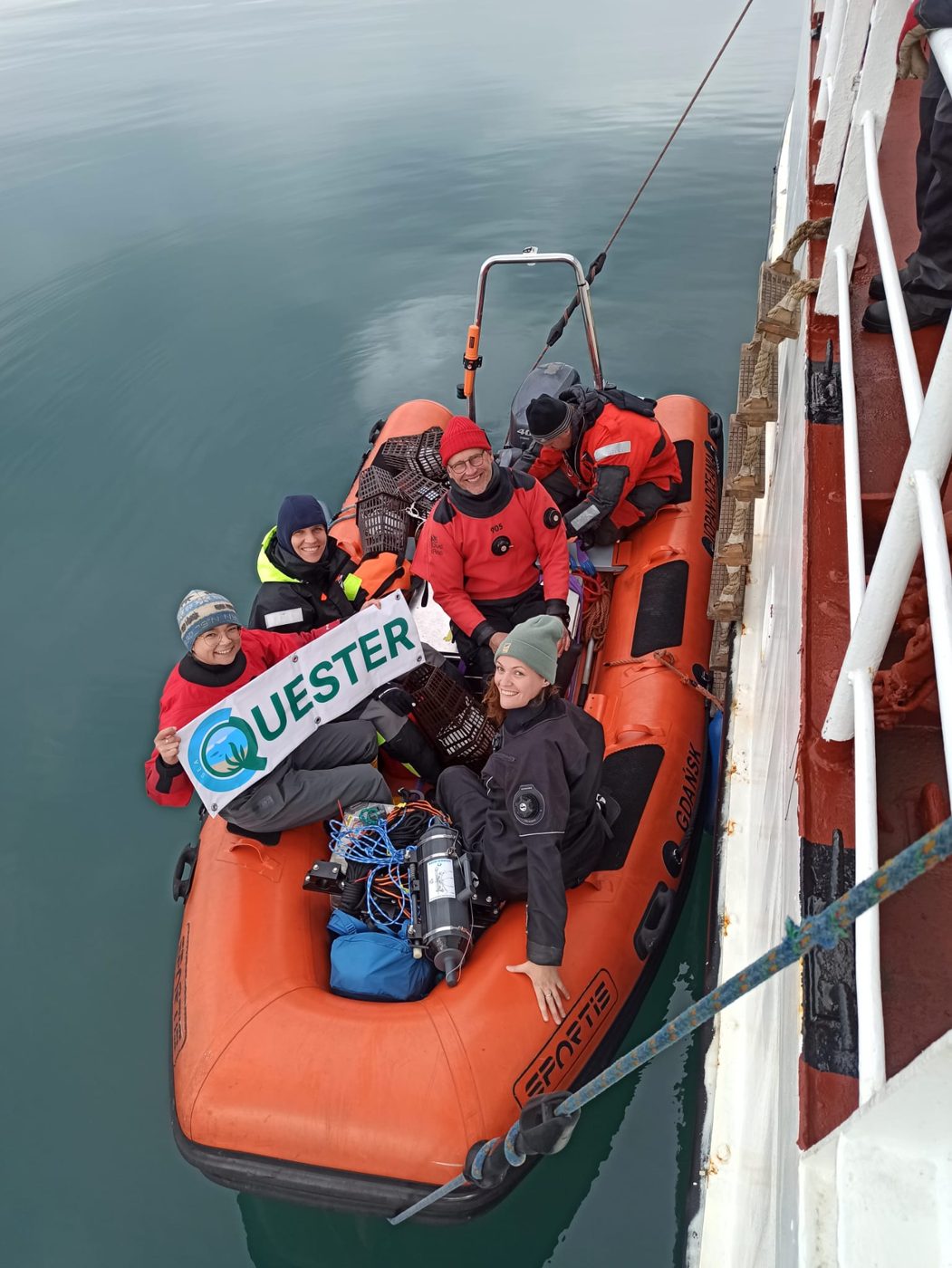
Five people in survival suits in an orange inflatable boat alongside the ship, two holding a SEA-Quester banner
The SEA-Quester team in the small boat
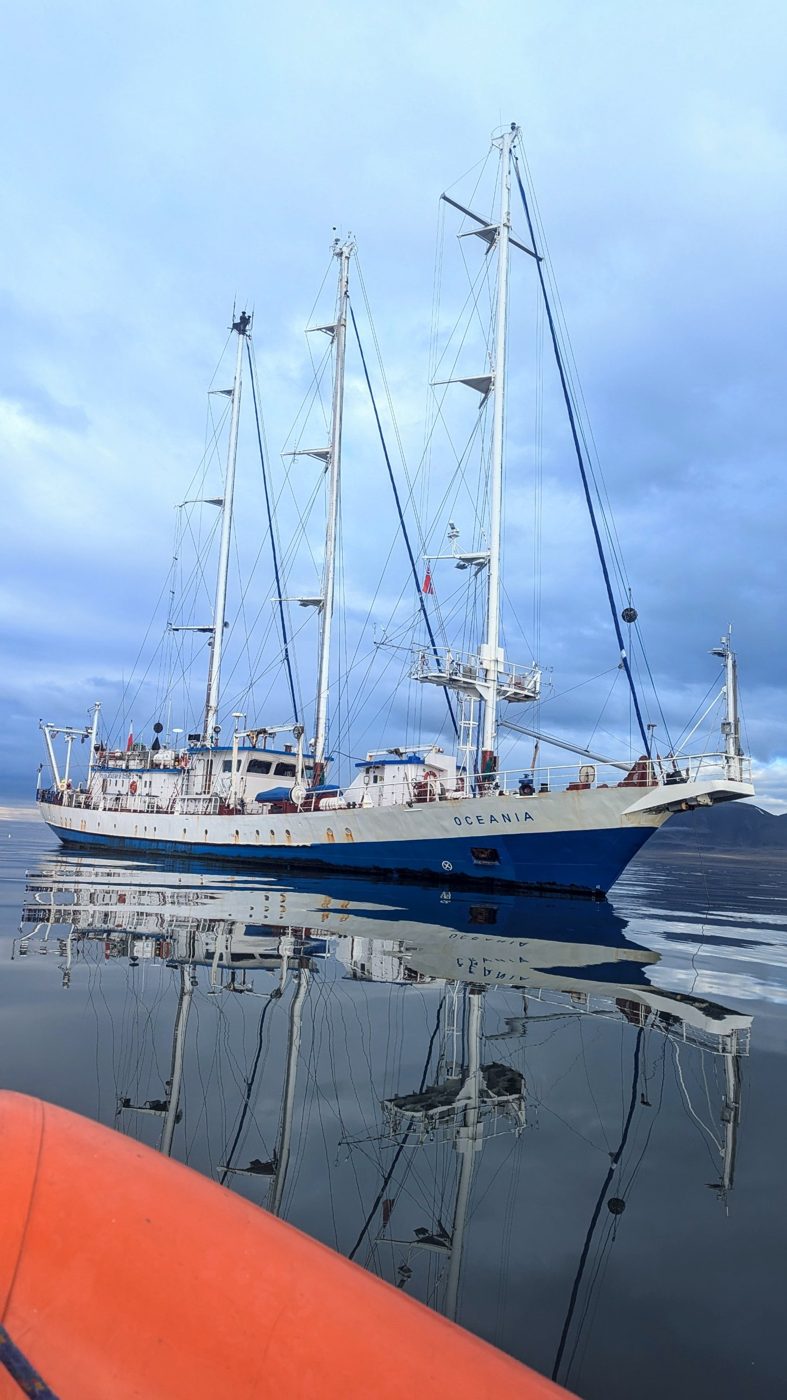
The three-masted research ship Oceania reflected in still water, seen from a small boat
Oceania on glassy water
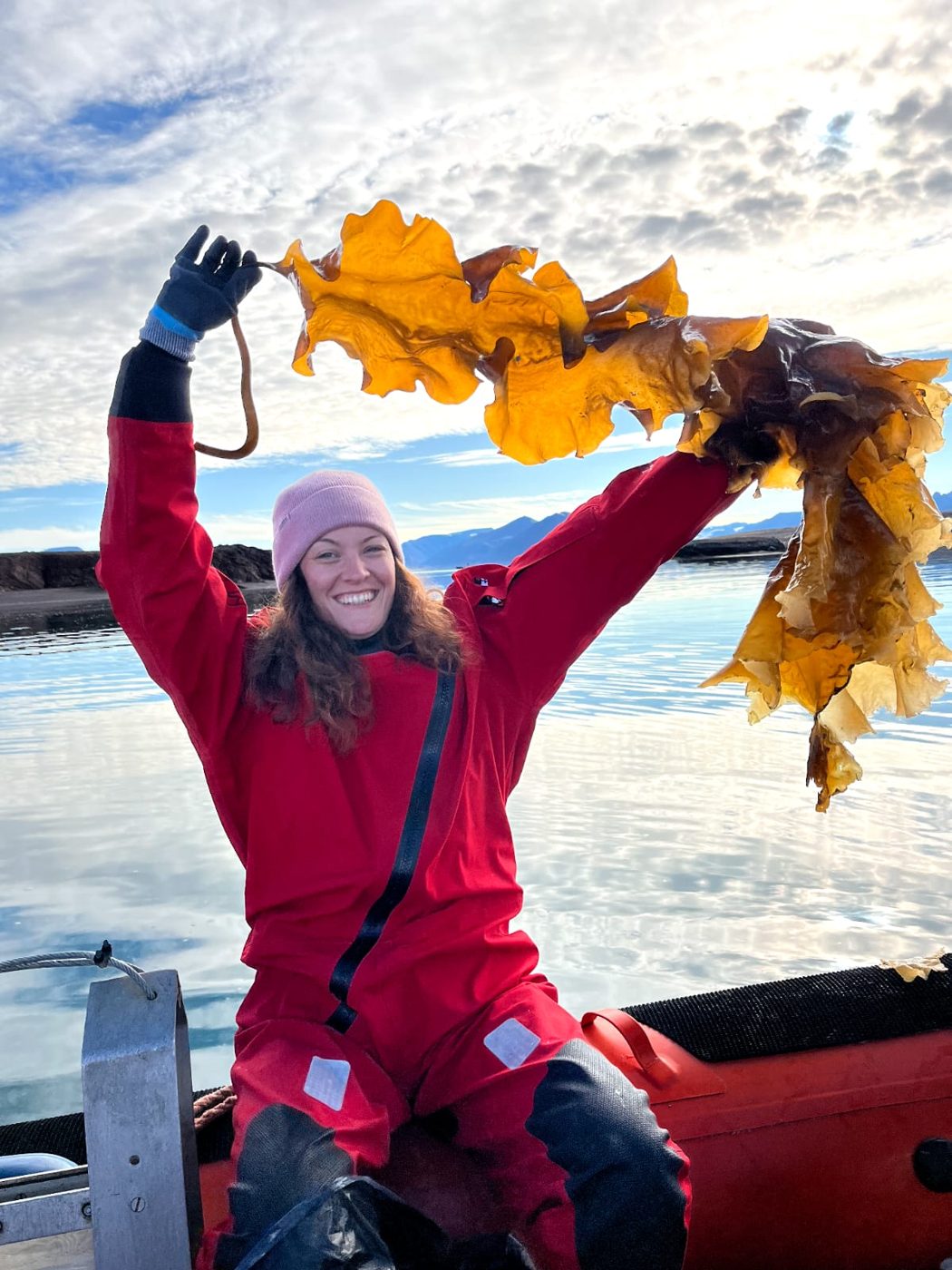
A researcher in a red suit sitting in a boat and holding a large golden-brown kelp above her head
A kelp haul
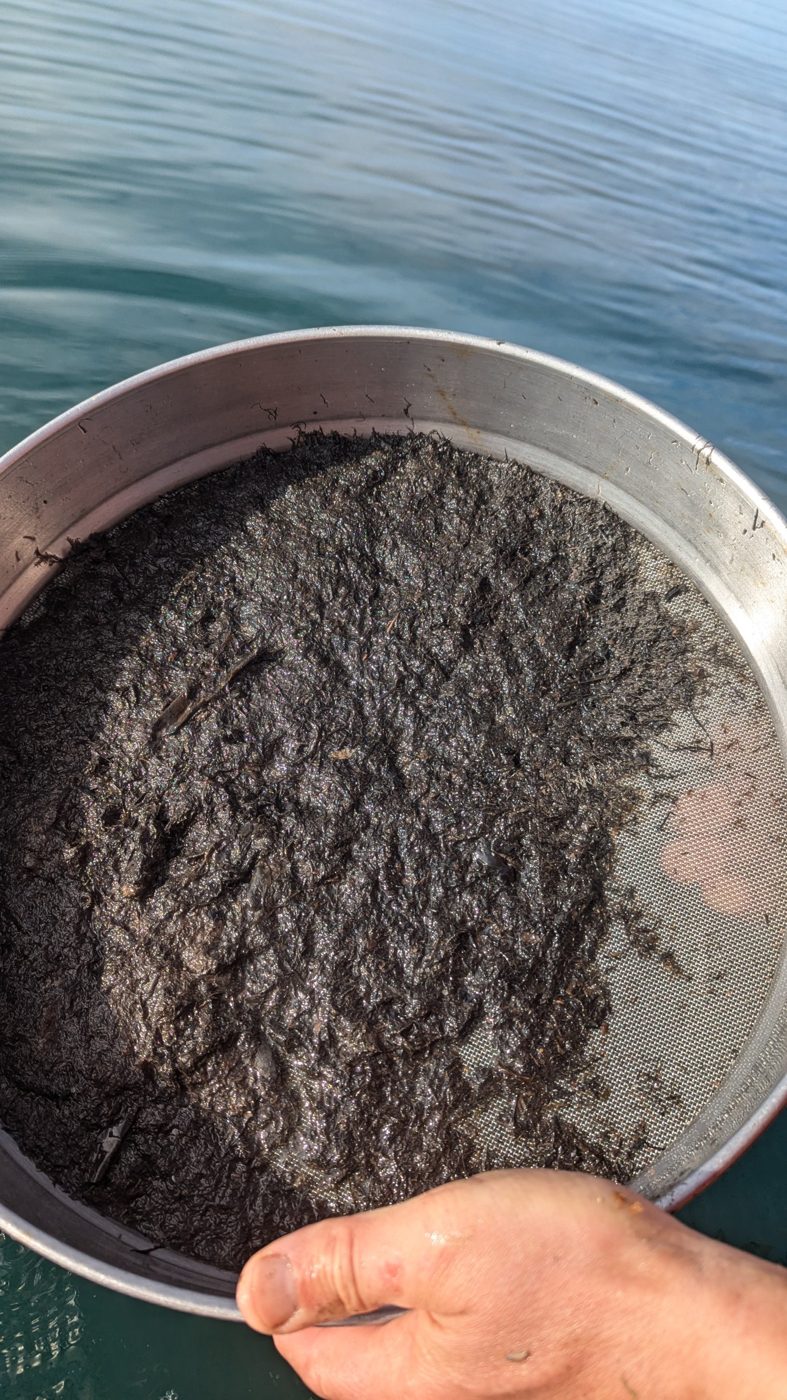
A metal sieve full of dark, wet plant material held over the water
Mid-sieve: what the mud was hiding
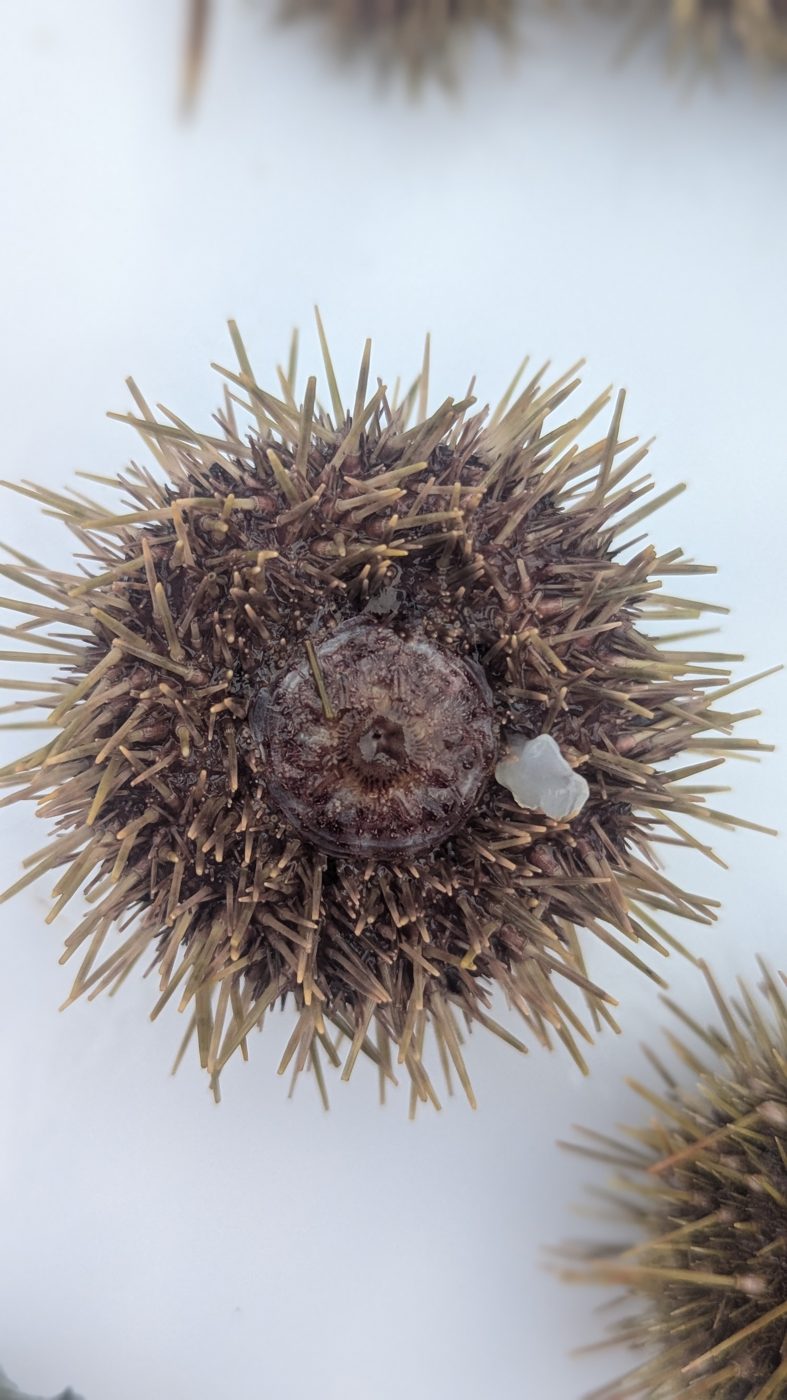
A brown sea urchin with pale spines seen from above
Sea urchin, close up
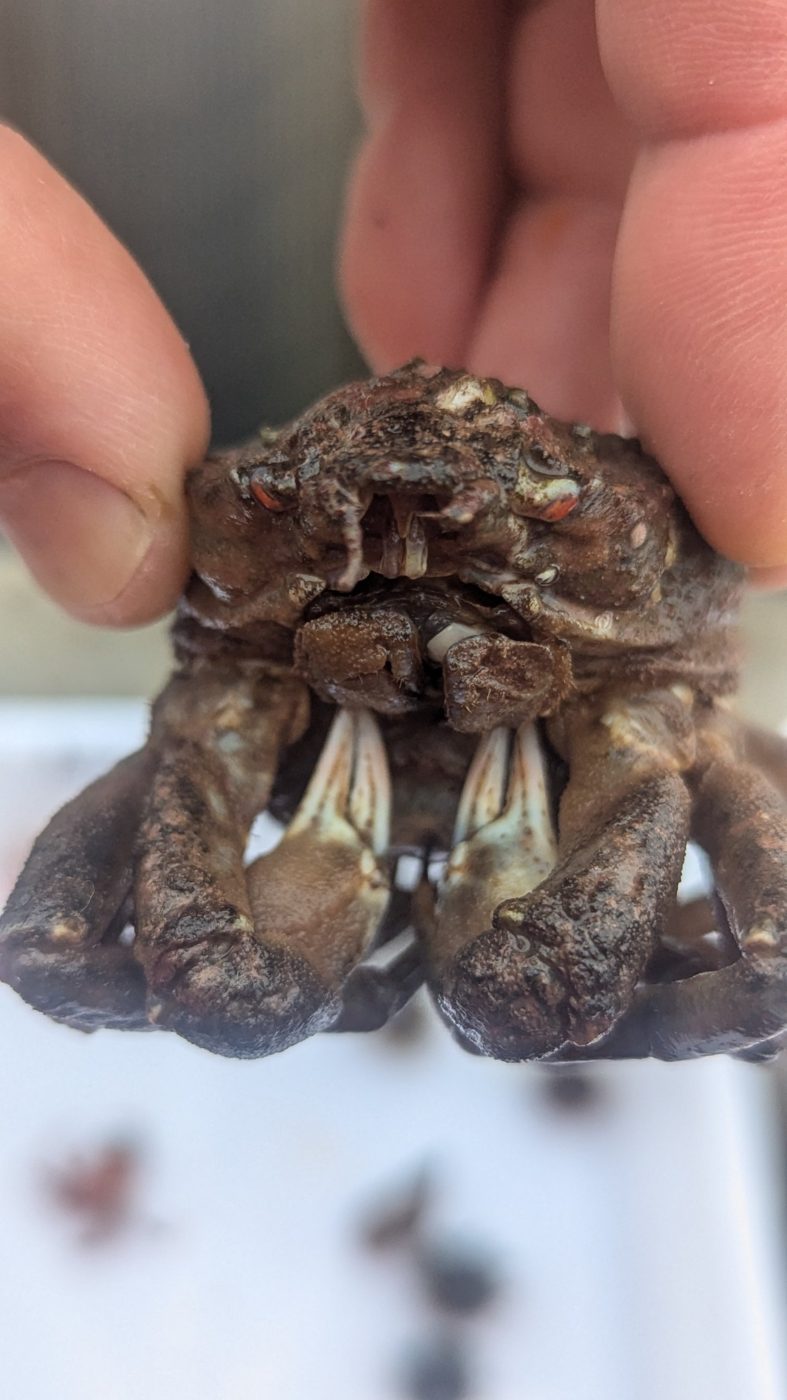
Close-up of the front of a crab held between fingers
Face to face with a crab
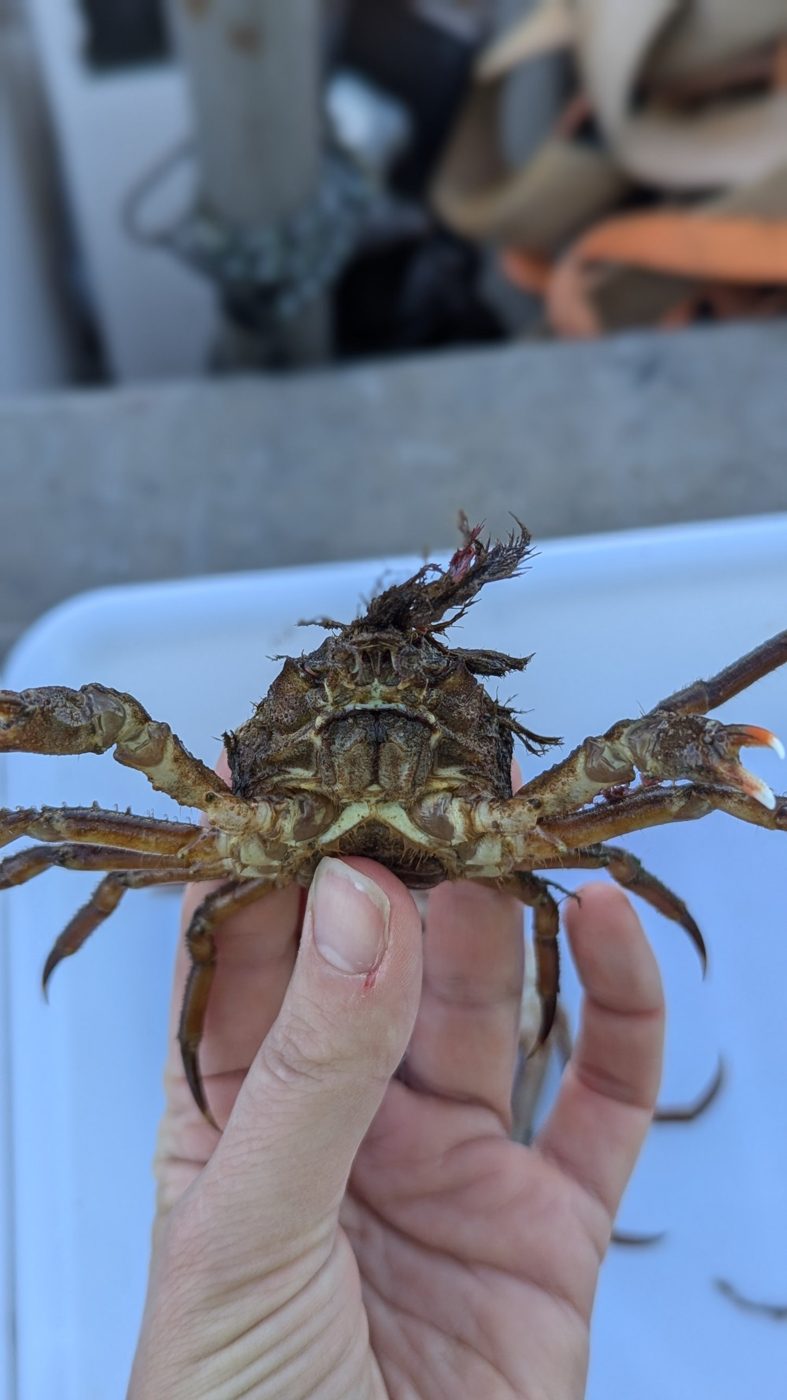
The underside of a crab with seaweed growing on its shell, held in a hand
A crab wearing seaweed
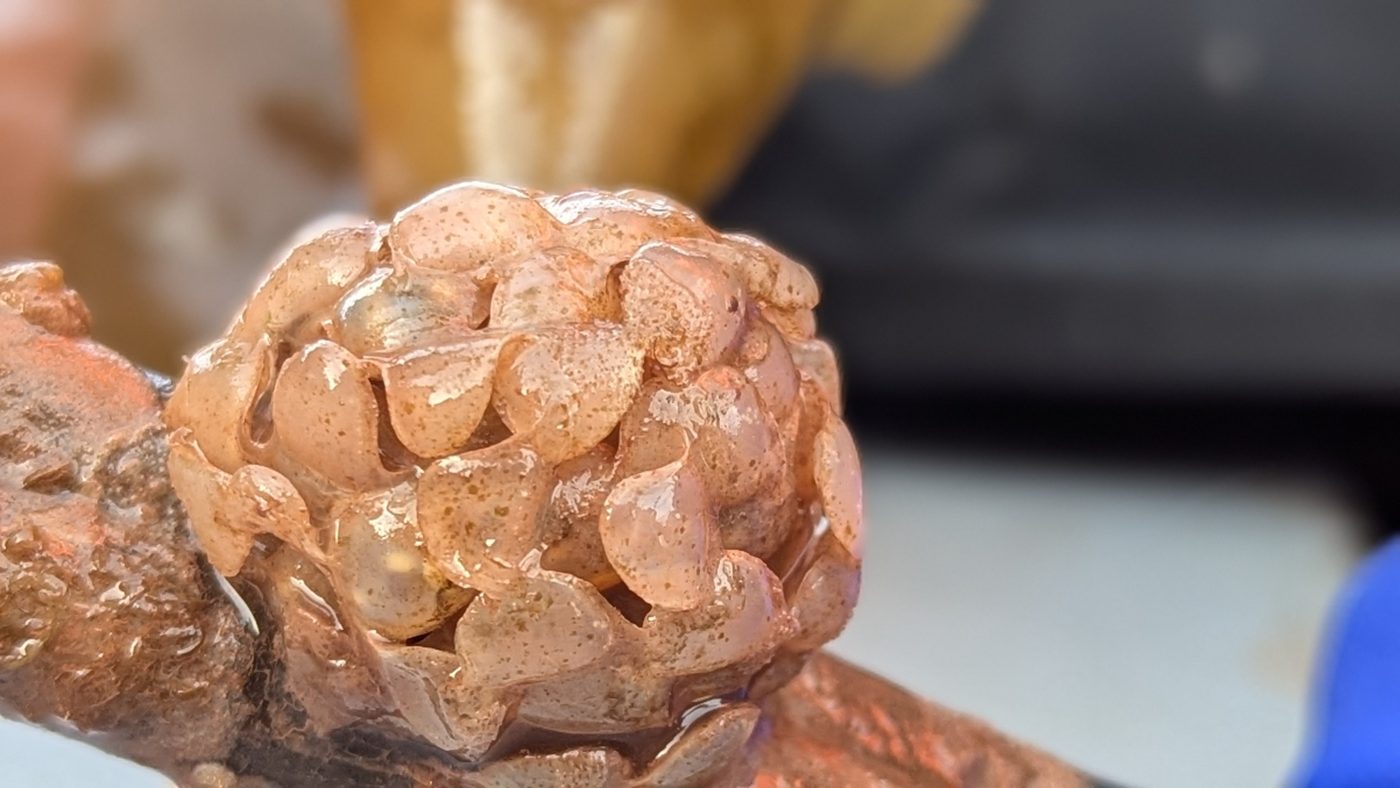
A glistening ball of pale orange egg capsules
A cluster of egg capsules
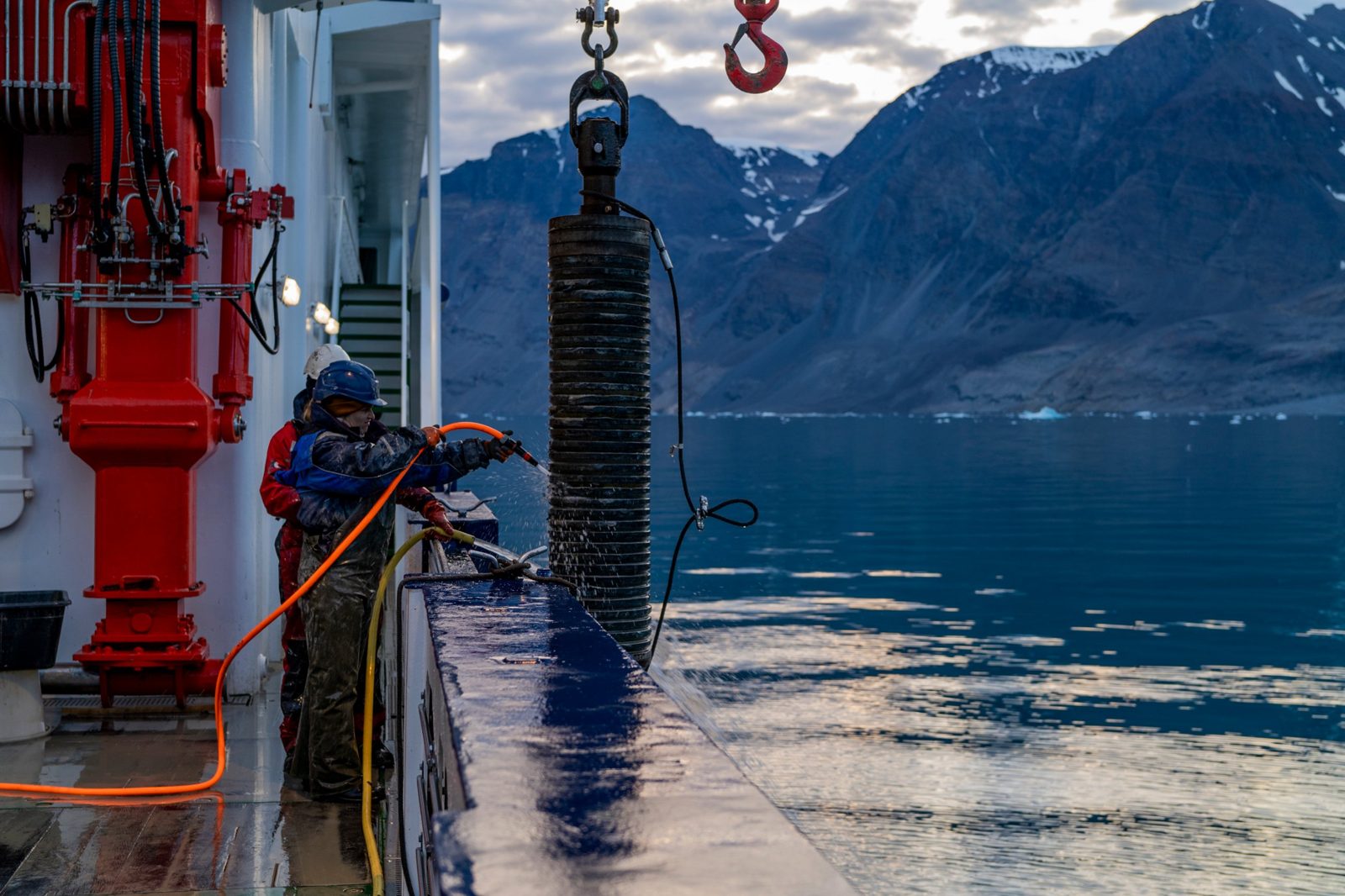
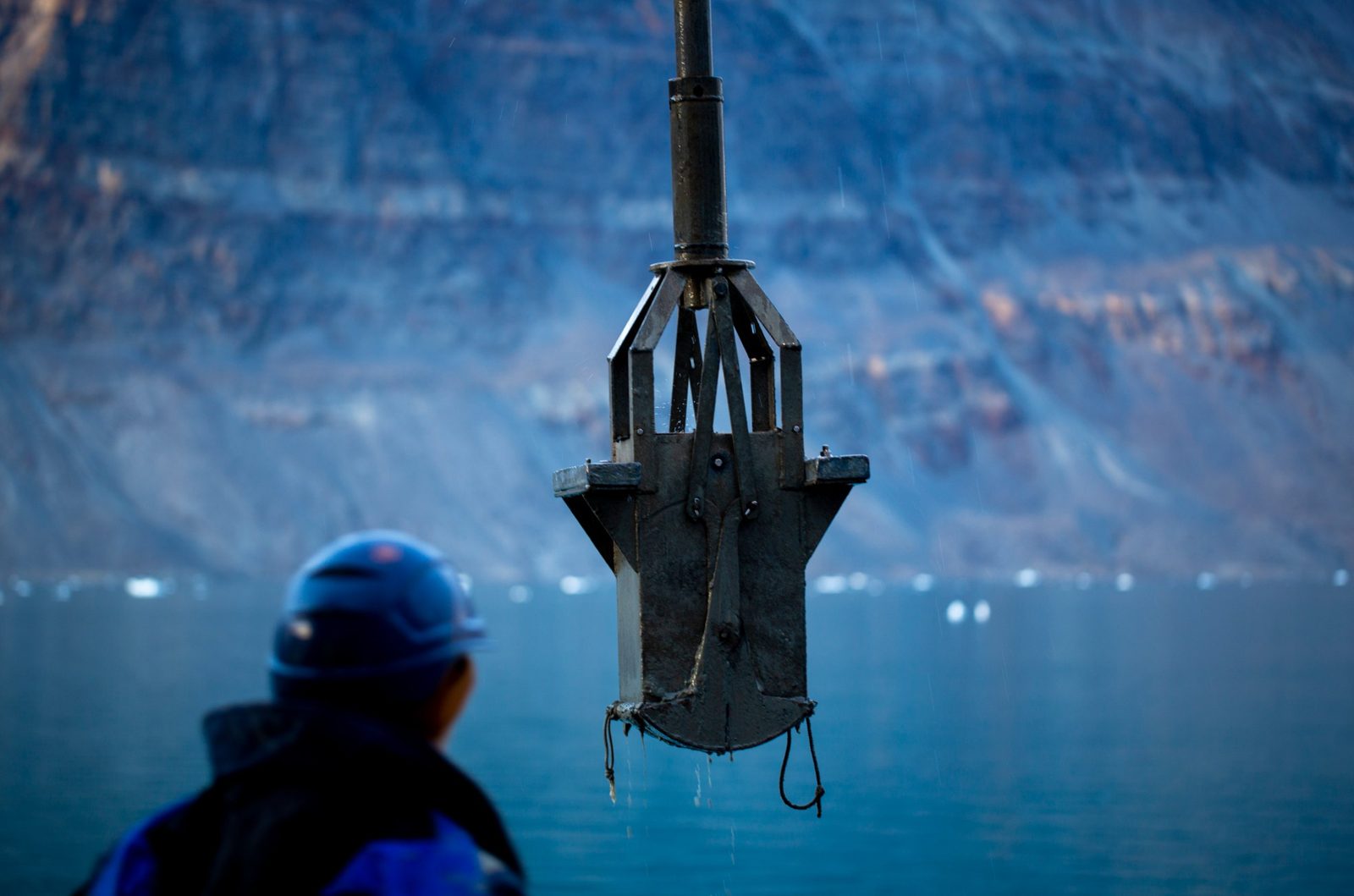
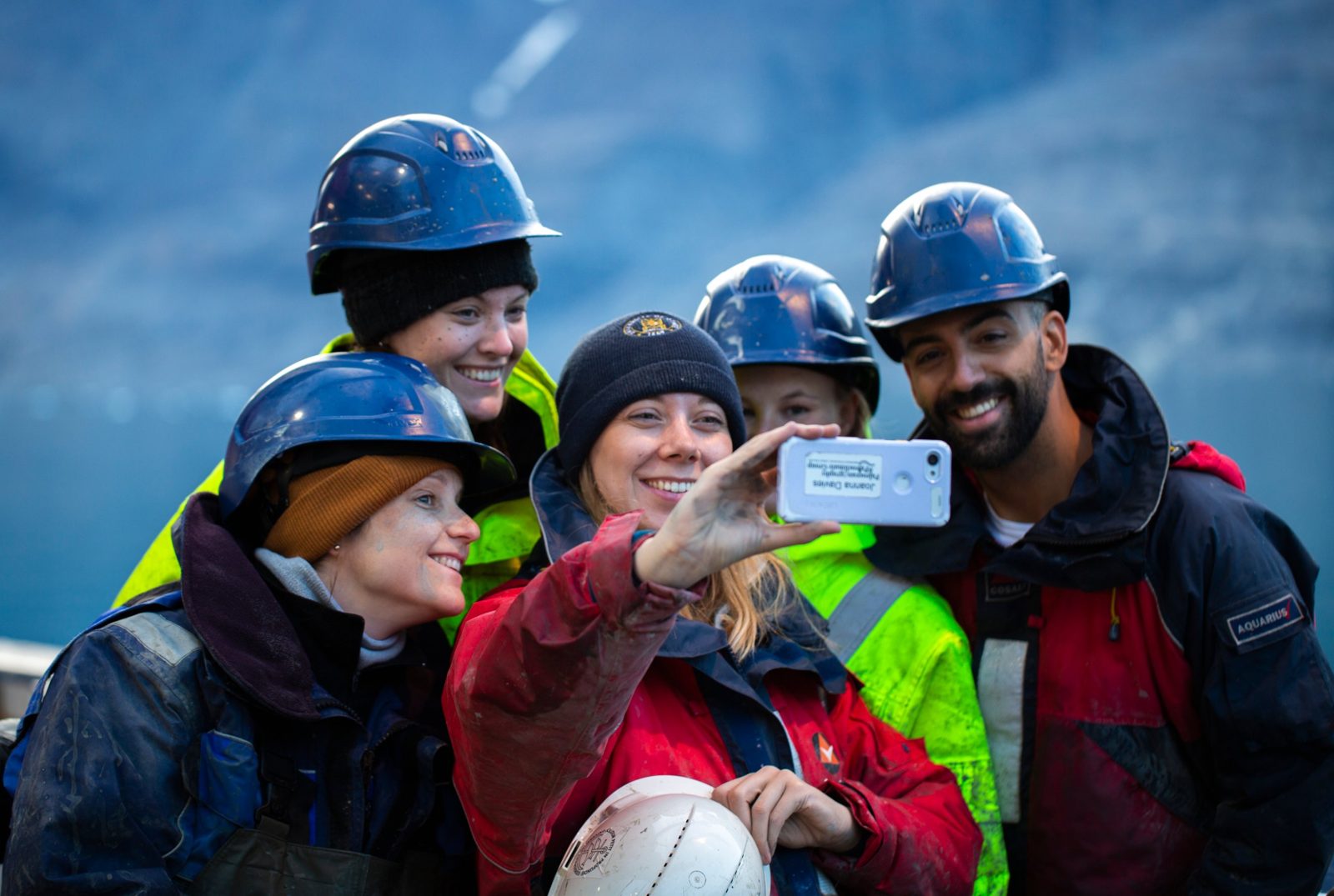
2022 Northeast Greenland ECOTIP cruise, R/V Merian · box coring, multibeam survey watches, kelp and benthos sampling
Two people in waterproofs hosing down a sediment corer hanging over the ship's side, mountains behind
Rinsing the corer on deck · Photo: Olivia Rempel / GRID-Arendal
A steel grab sampler hanging above the fjord, dripping, with a person in a helmet watching
Grab sampler over the fjord · Photo: Olivia Rempel / GRID-Arendal
Five mud-spattered researchers in hard hats crowd together for a phone selfie
The benthos team on deck · Photo: Olivia Rempel / GRID-Arendal
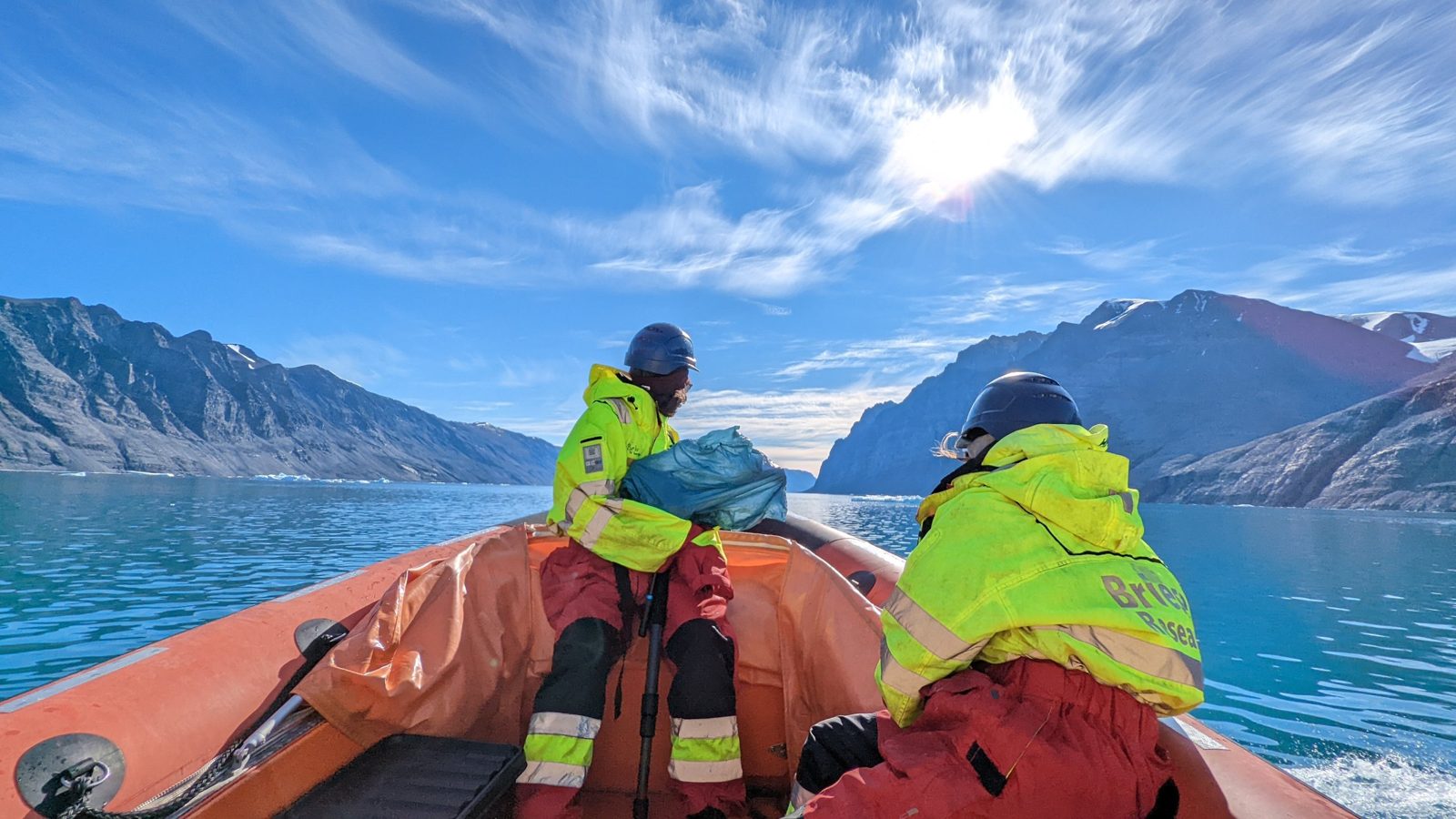
Two researchers in high-visibility suits in a small orange boat heading up a sunlit fjord
By small boat up the fjord
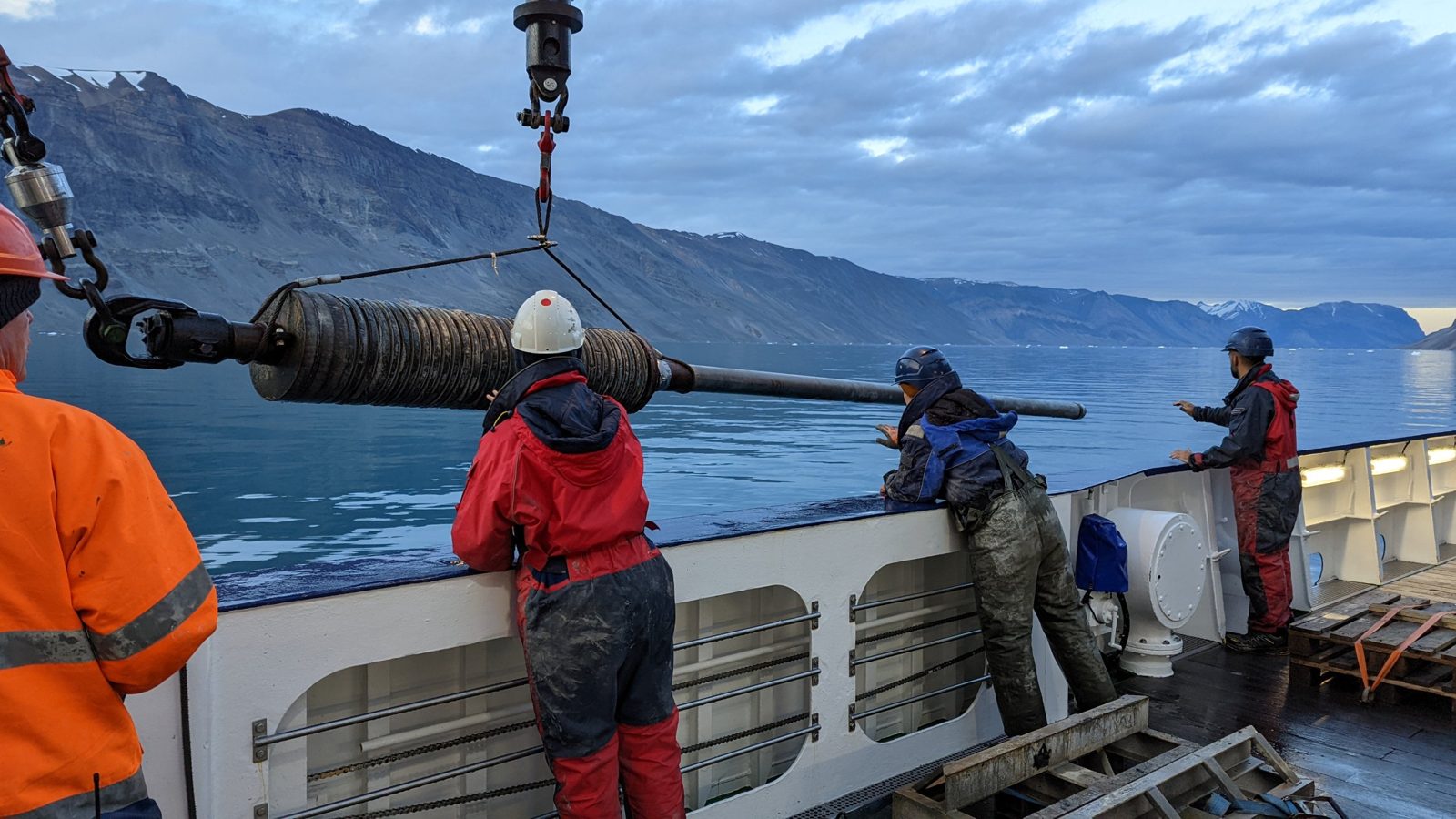
Crew guiding a long sediment corer back over the ship's rail
Bringing the corer back aboard
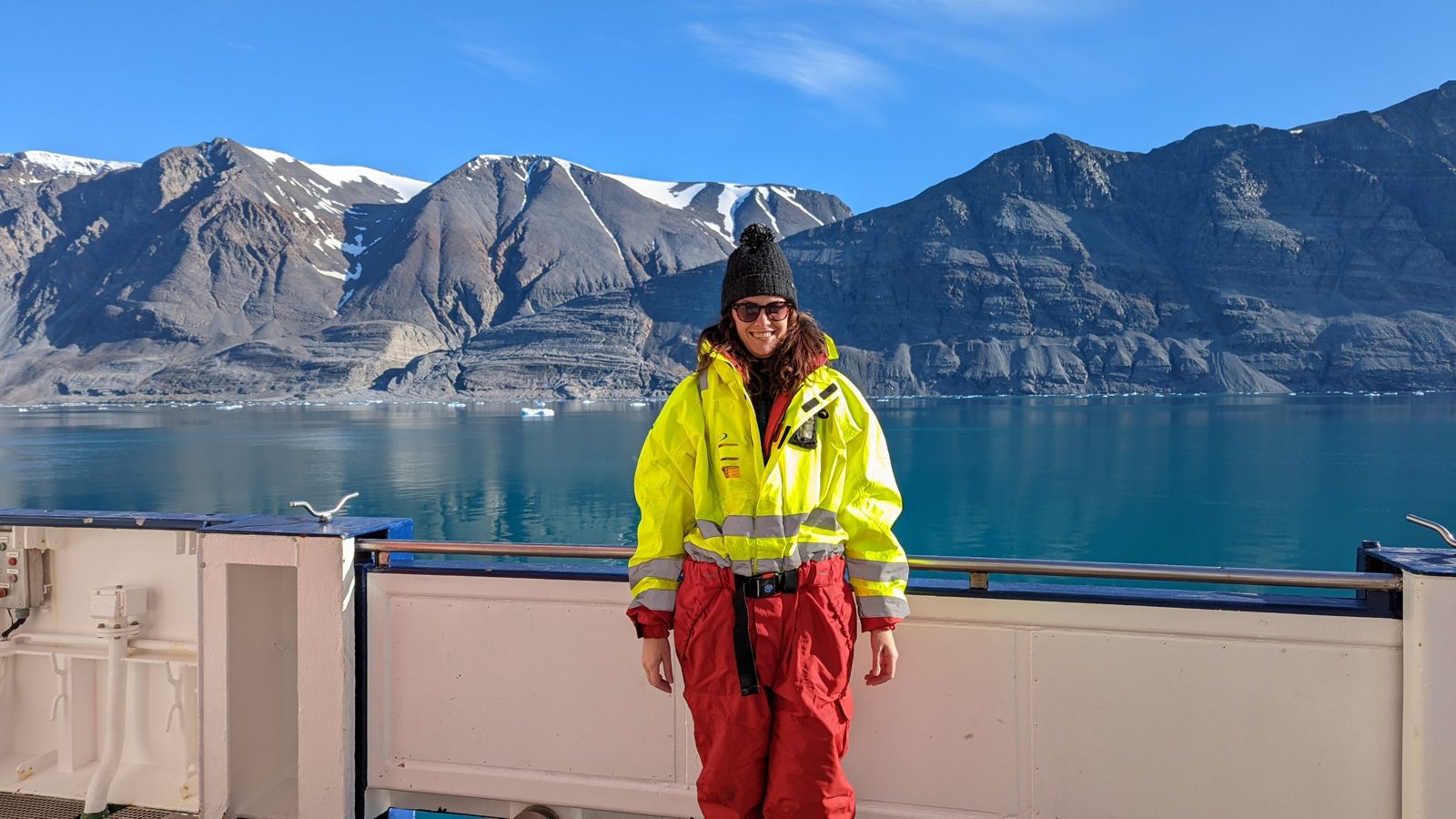
A researcher in a yellow and red survival suit on deck in front of a calm fjord and layered mountains
Suited up for the small boat
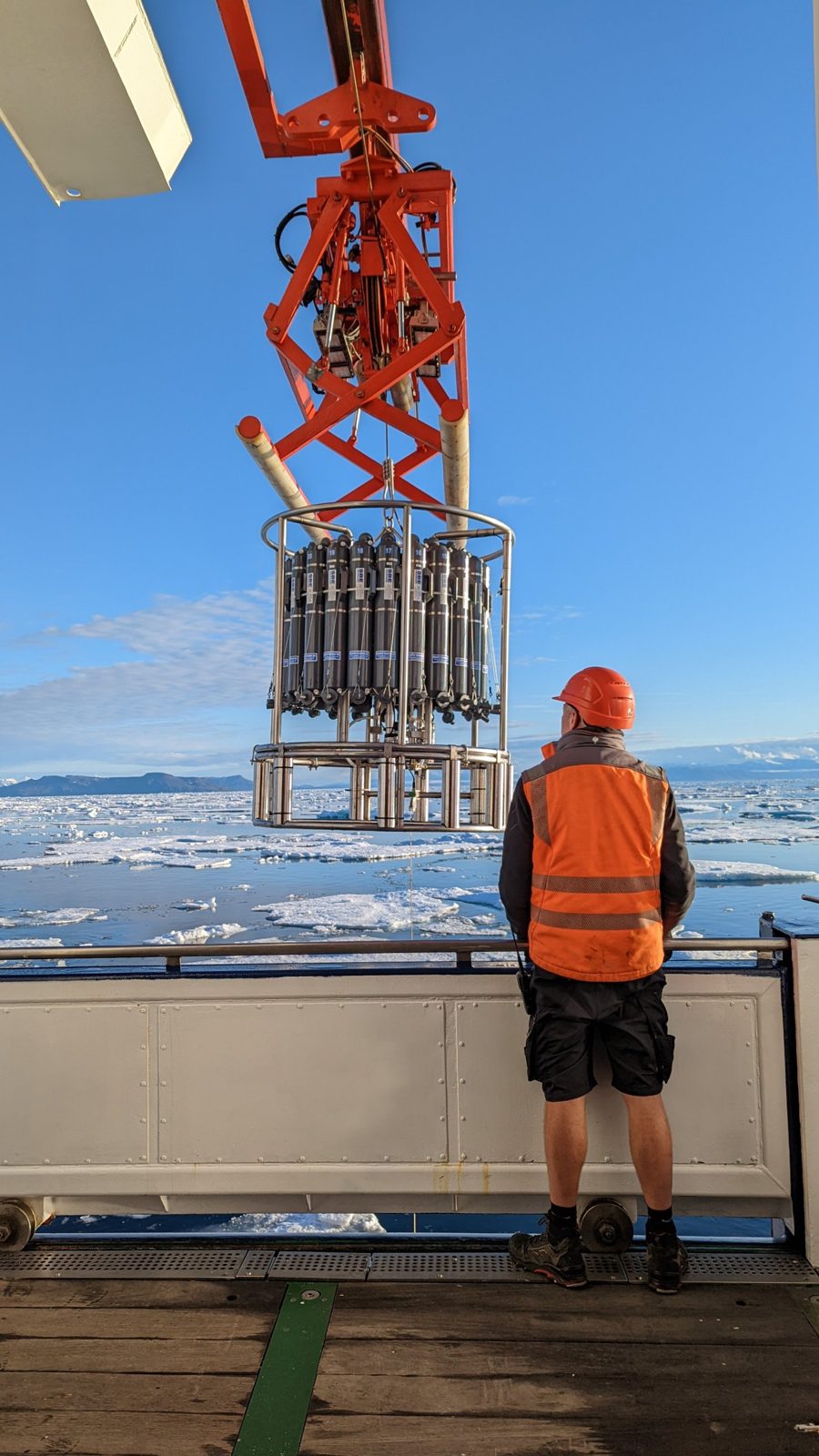
A water-sampling rosette hanging from an orange crane above sea ice, a crew member watching
Water sampler going over the side
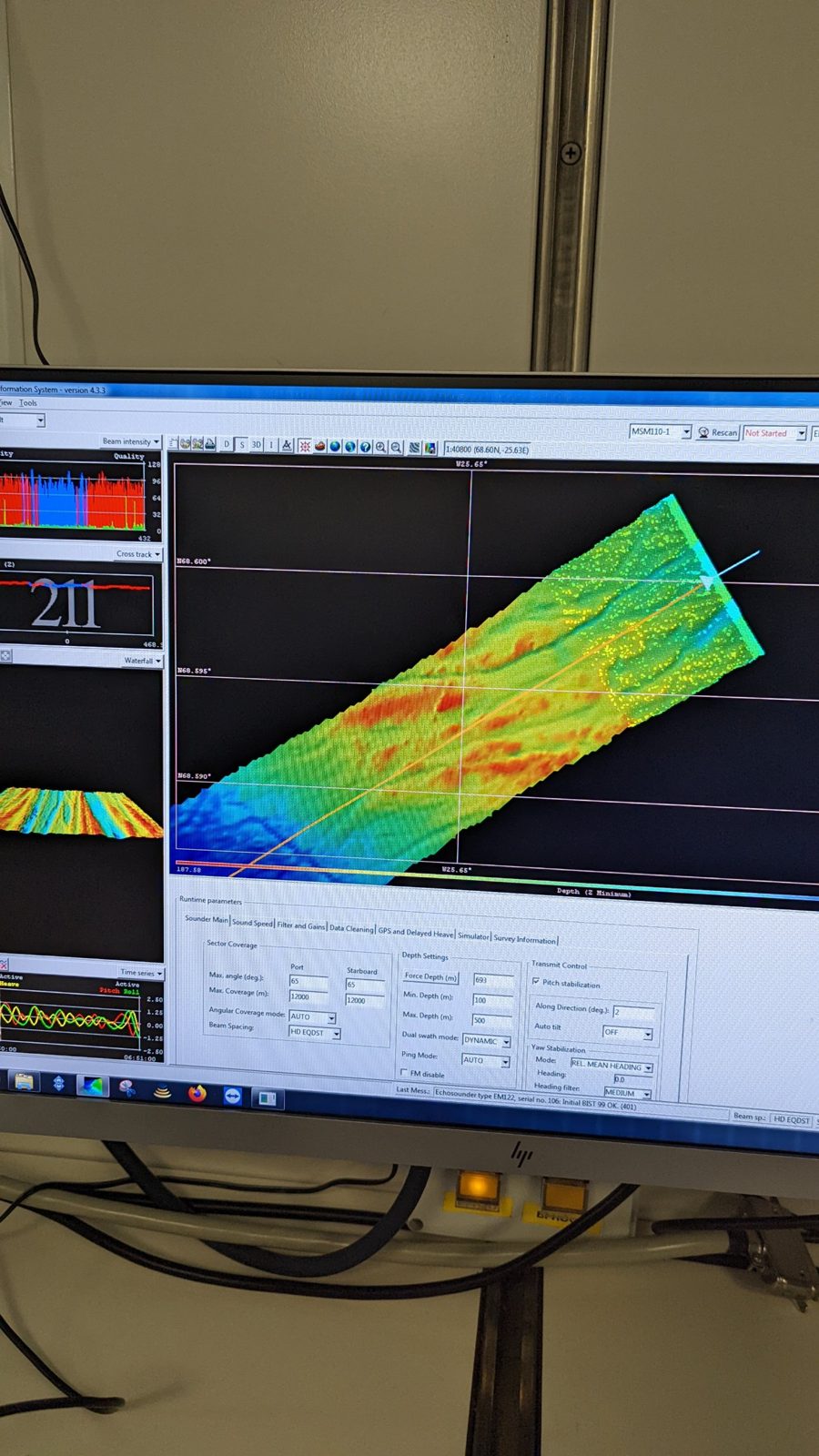
A computer screen showing a colour-coded multibeam map of the seafloor
Mapping the seabed on multibeam watch
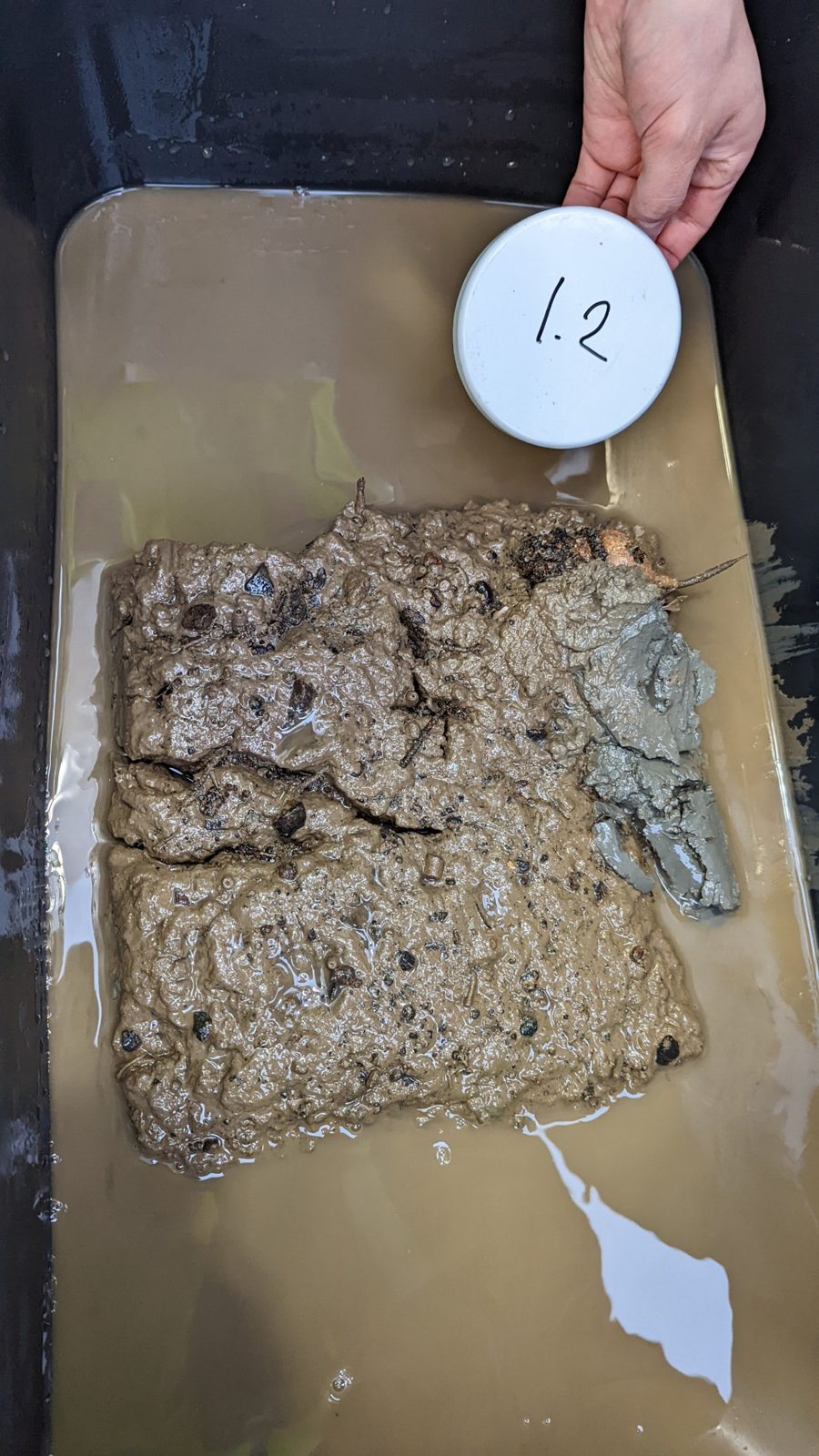
A block of wet brown and grey seafloor mud in a tray, labelled 1.2
Seafloor mud, before sieving
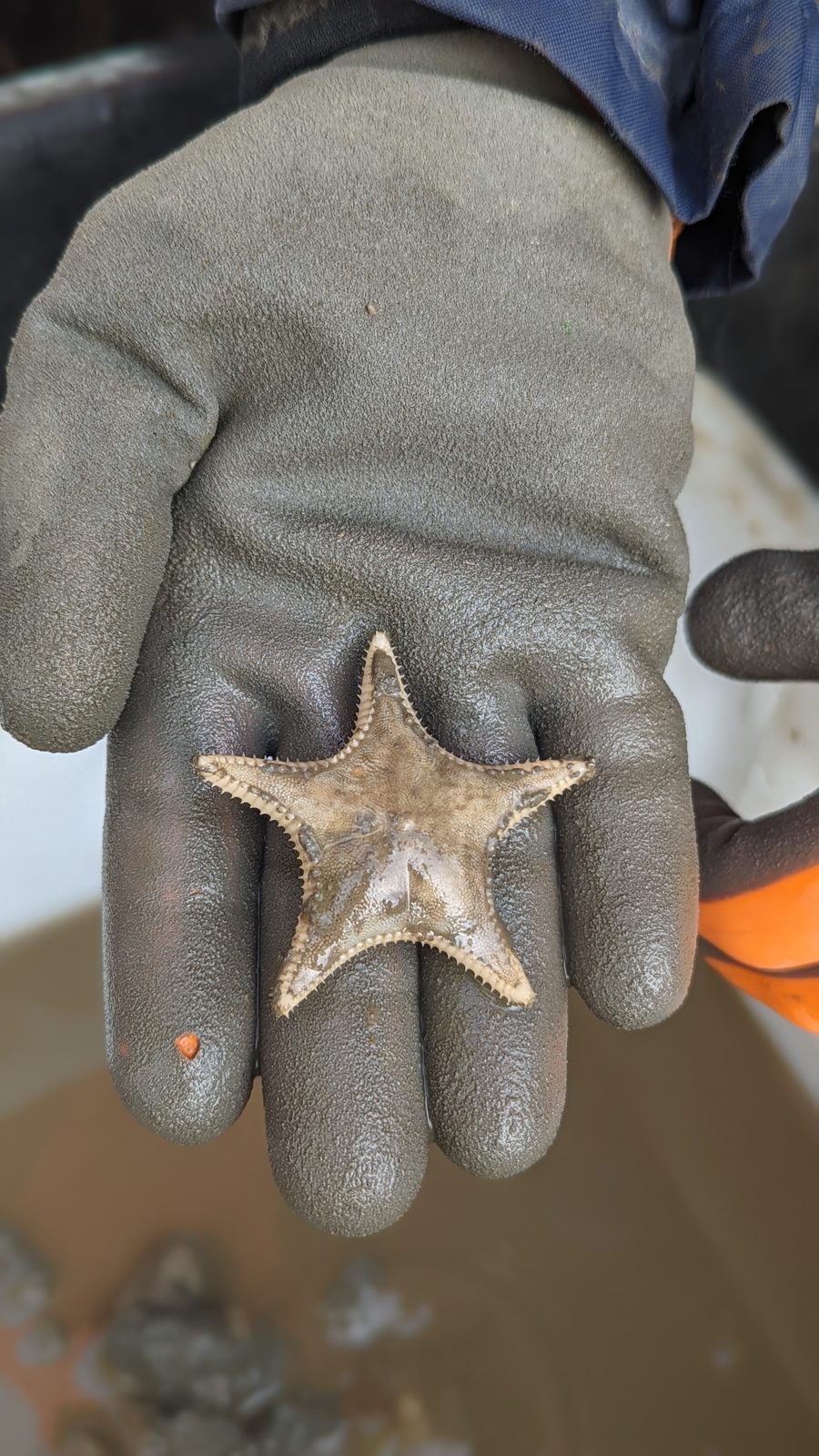
A small pale sea star resting on a muddy gloved hand
A sea star from the sample
2021 West Greenland ECOTIP cruise, R/V Dana · benthic box coring, sieving and preservation
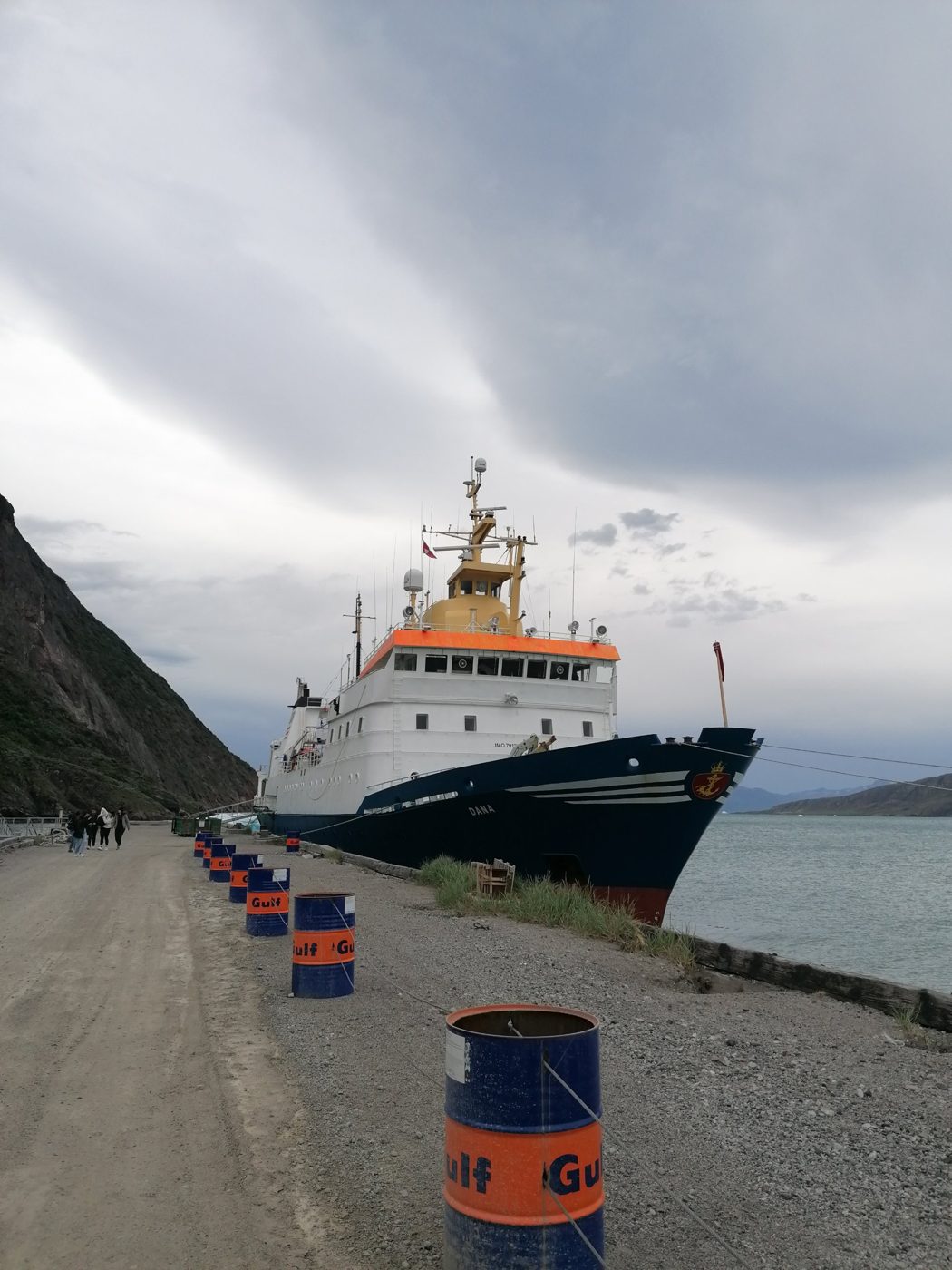
The research vessel Dana moored at a gravel quay under a grey sky
R/V Dana alongside in Greenland
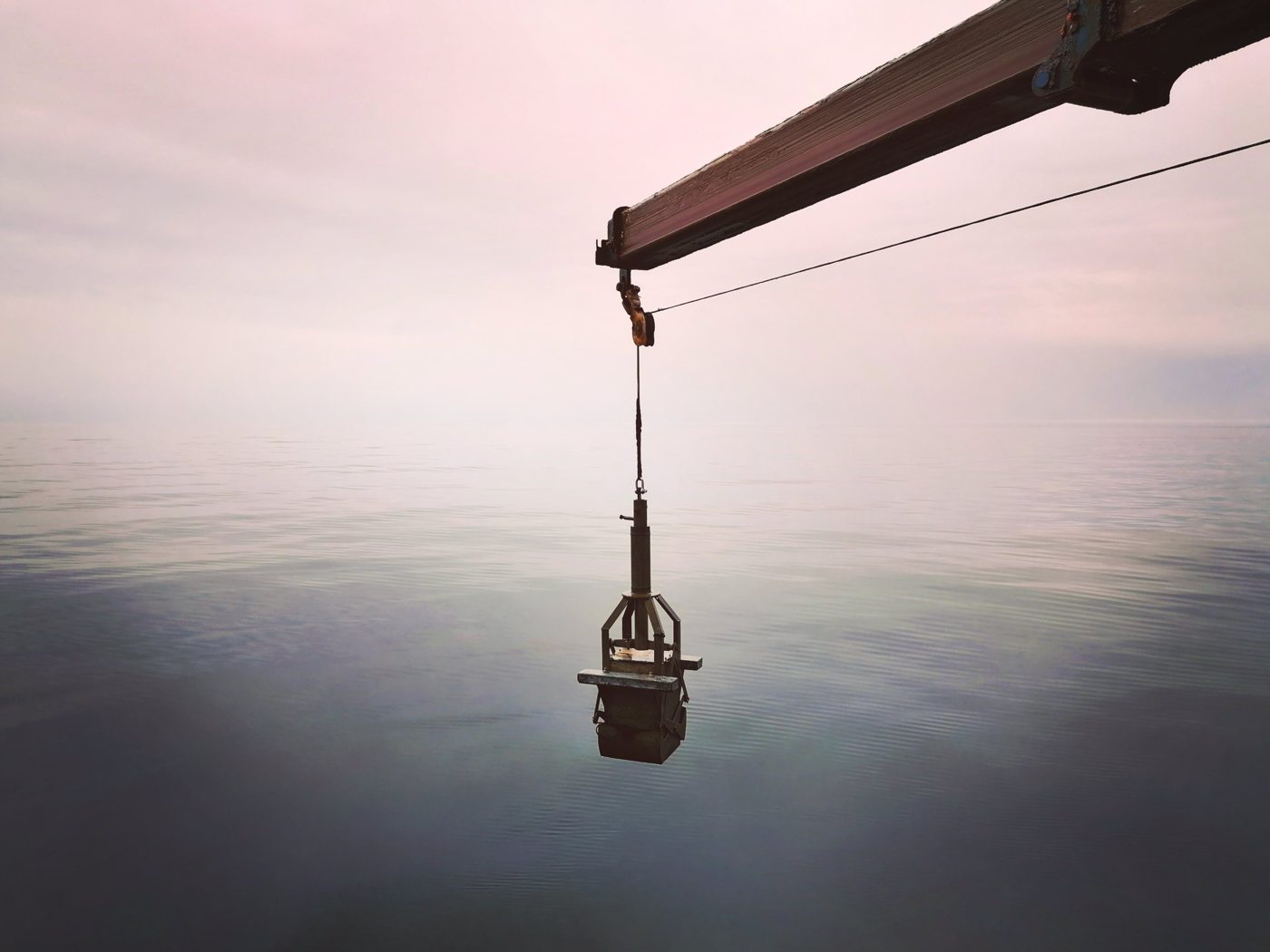
A grab sampler hanging from a crane above a glassy, pink-lit sea
The grab going down on a still evening
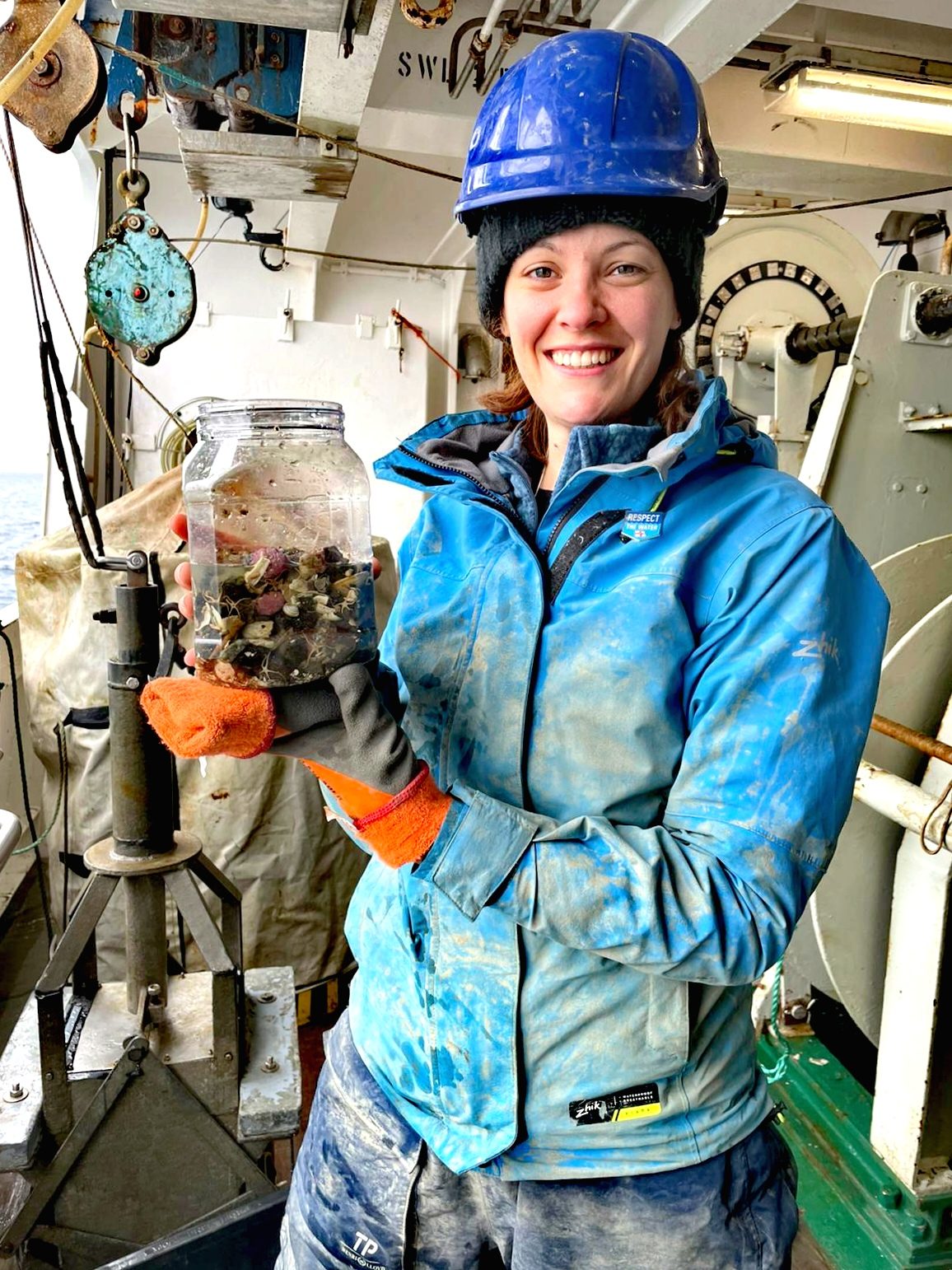
A researcher in a hard hat on deck holding up a jar of seafloor animals
A jar of seafloor animals, fresh on deck
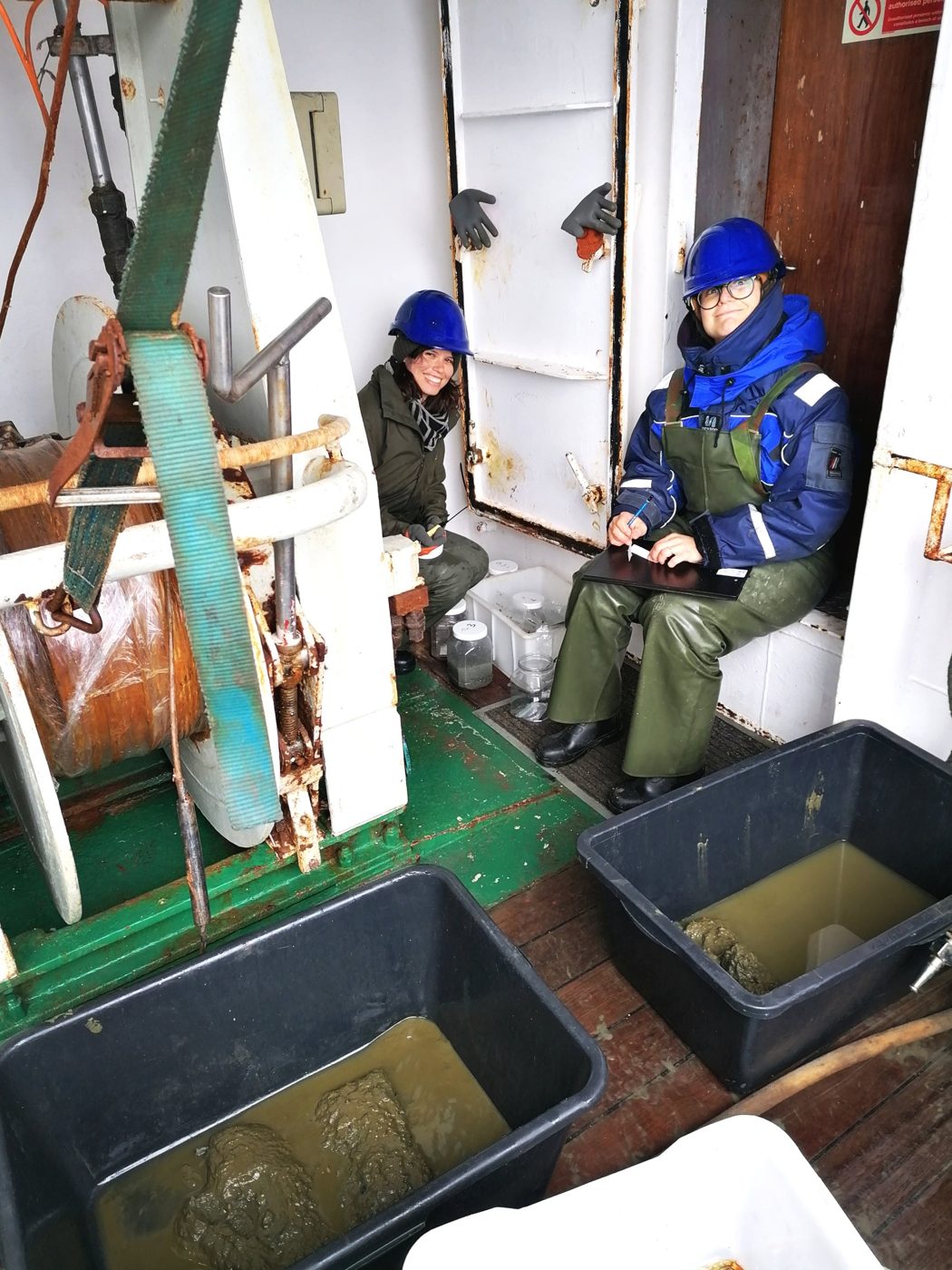
Two researchers in hard hats sitting on deck beside tubs of muddy water and sample jars
Logging samples beside the sieving tubs
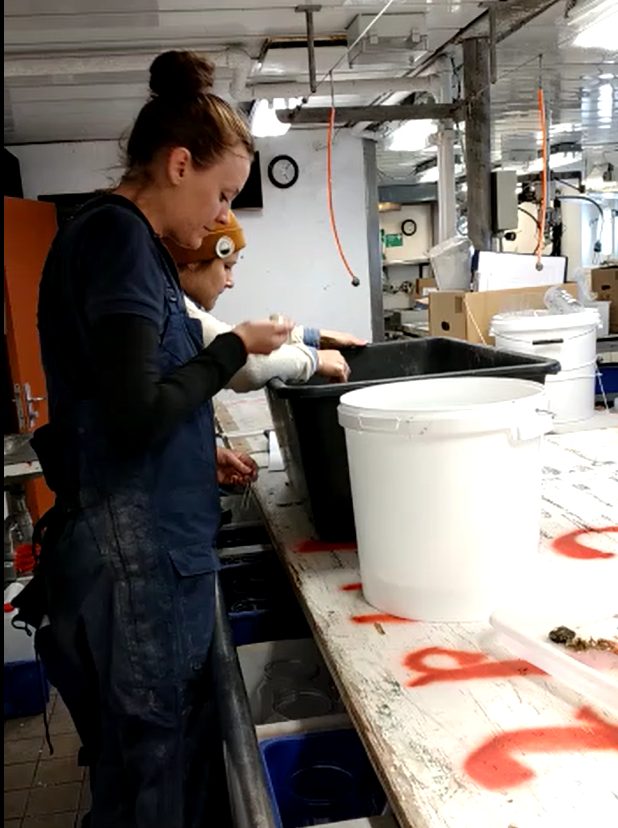
Two researchers picking through a sample at a bench in the ship laboratory
Sorting samples in the ship lab
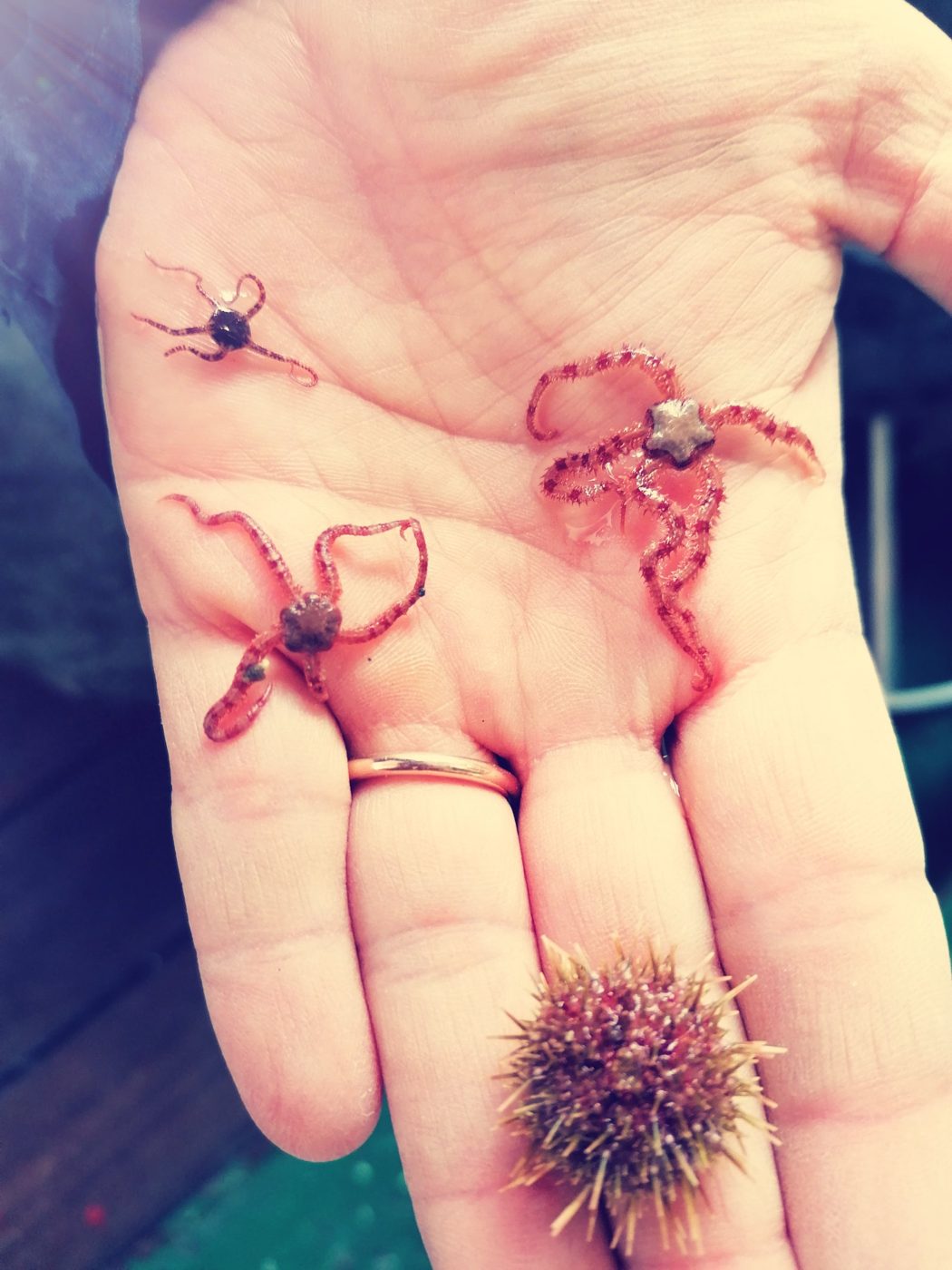
Three red brittle stars and a spiny sea urchin on an open palm
Brittle stars and a sea urchin
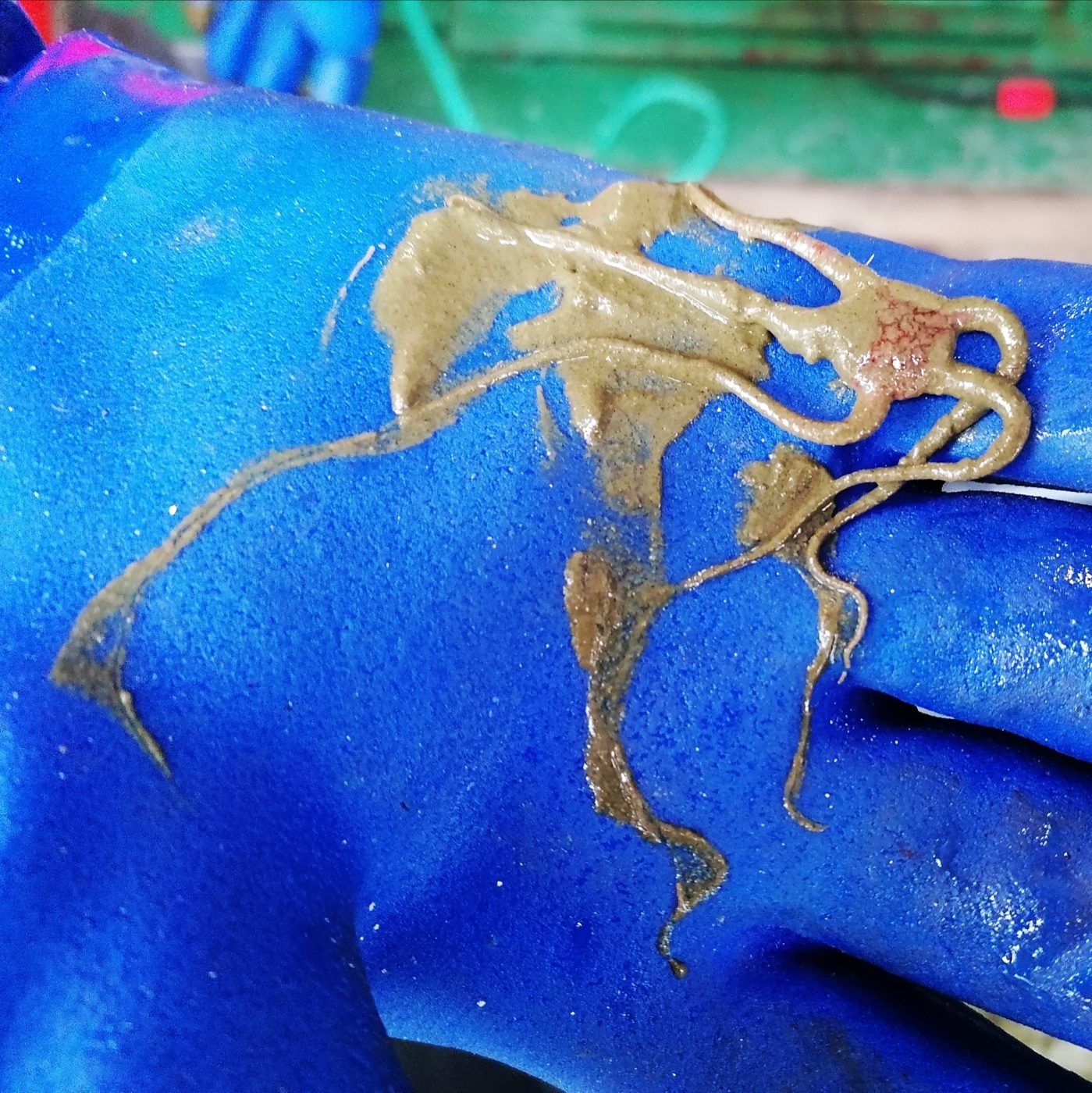
A long mud-coated worm draped over a blue rubber glove
A worm, straight out of the mud
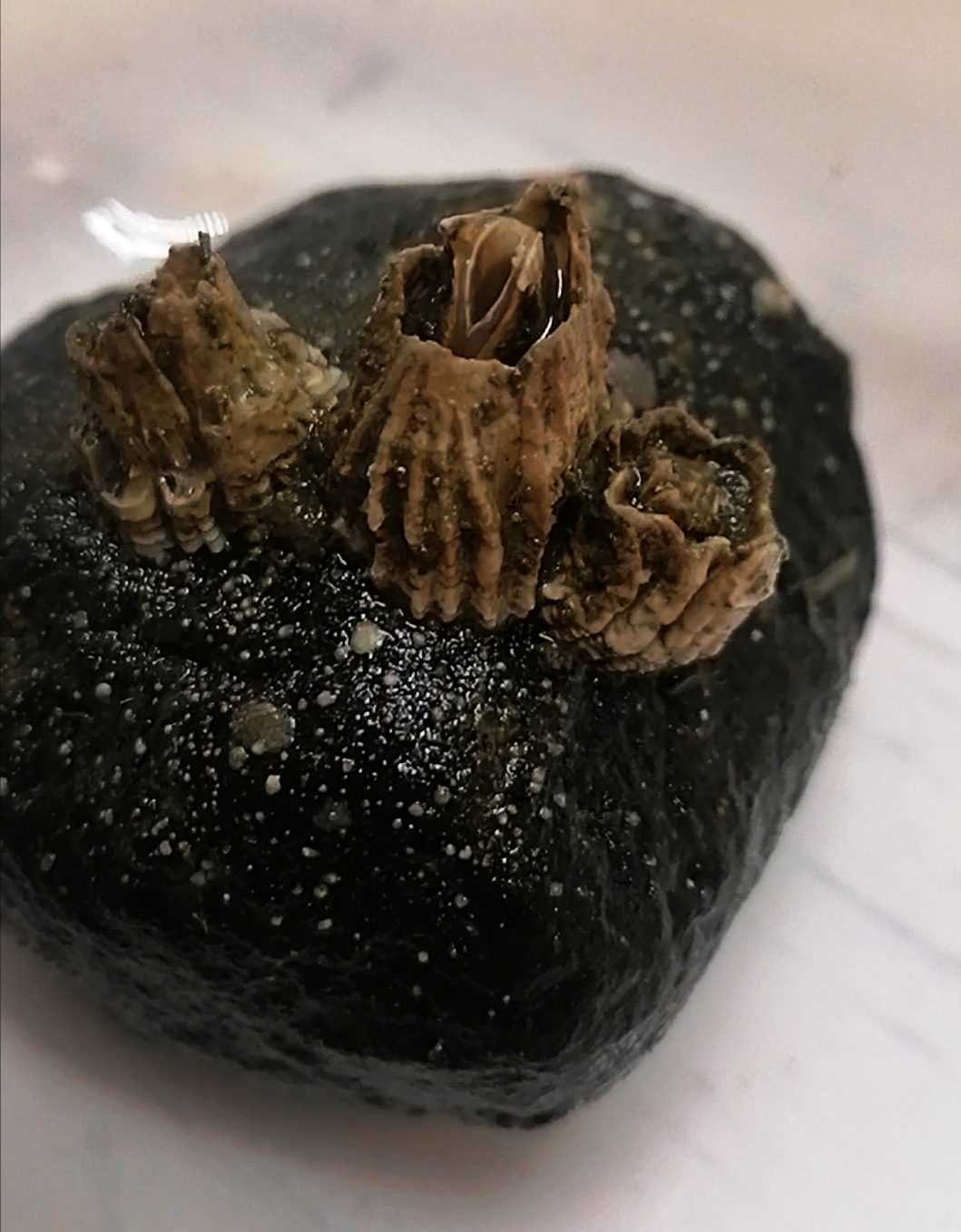
Three barnacles attached to a wet black stone
Barnacles on a stone
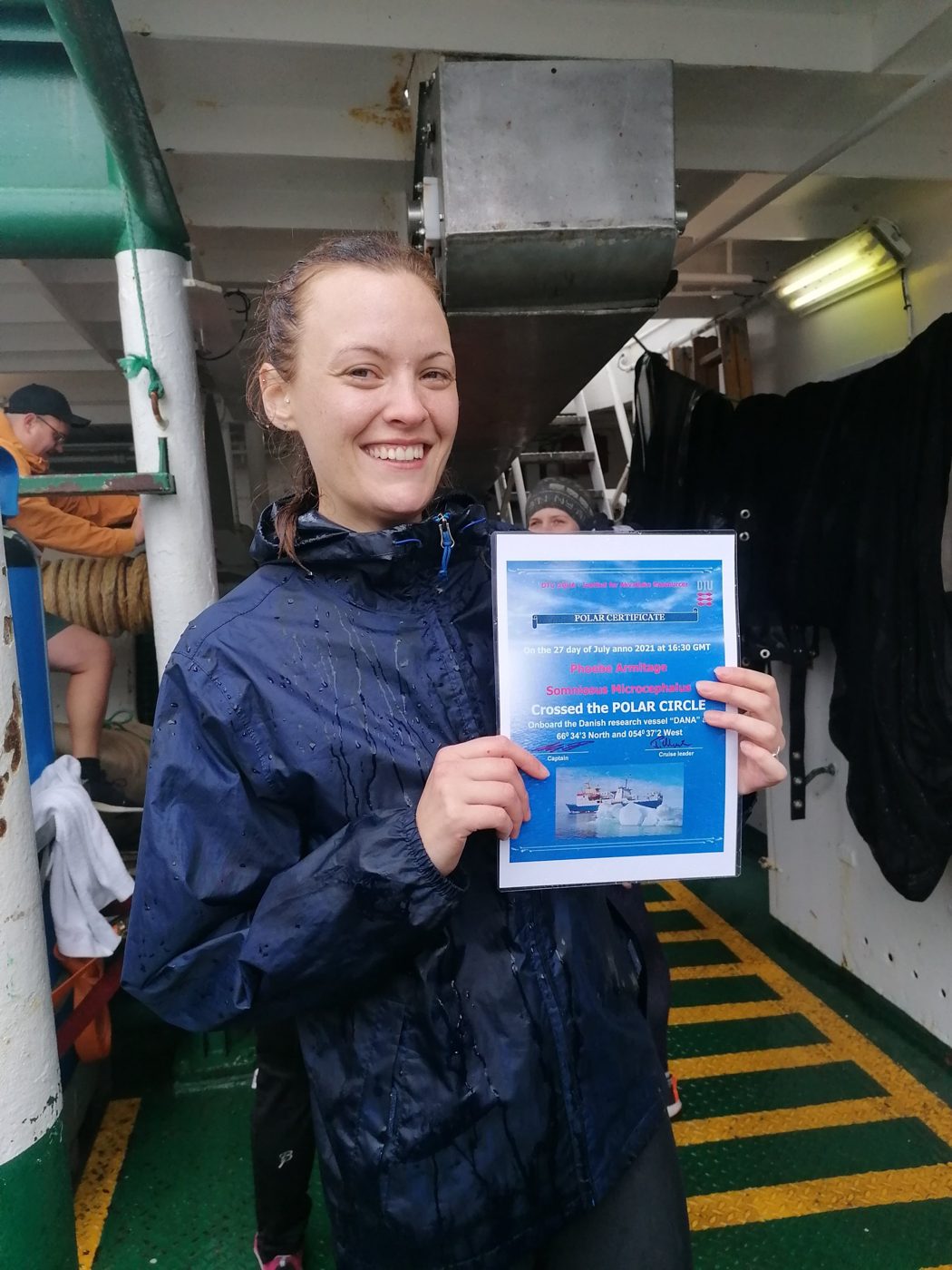
A rain-soaked researcher on deck holding up a polar circle crossing certificate
Crossing the polar circle, 27 July 2021
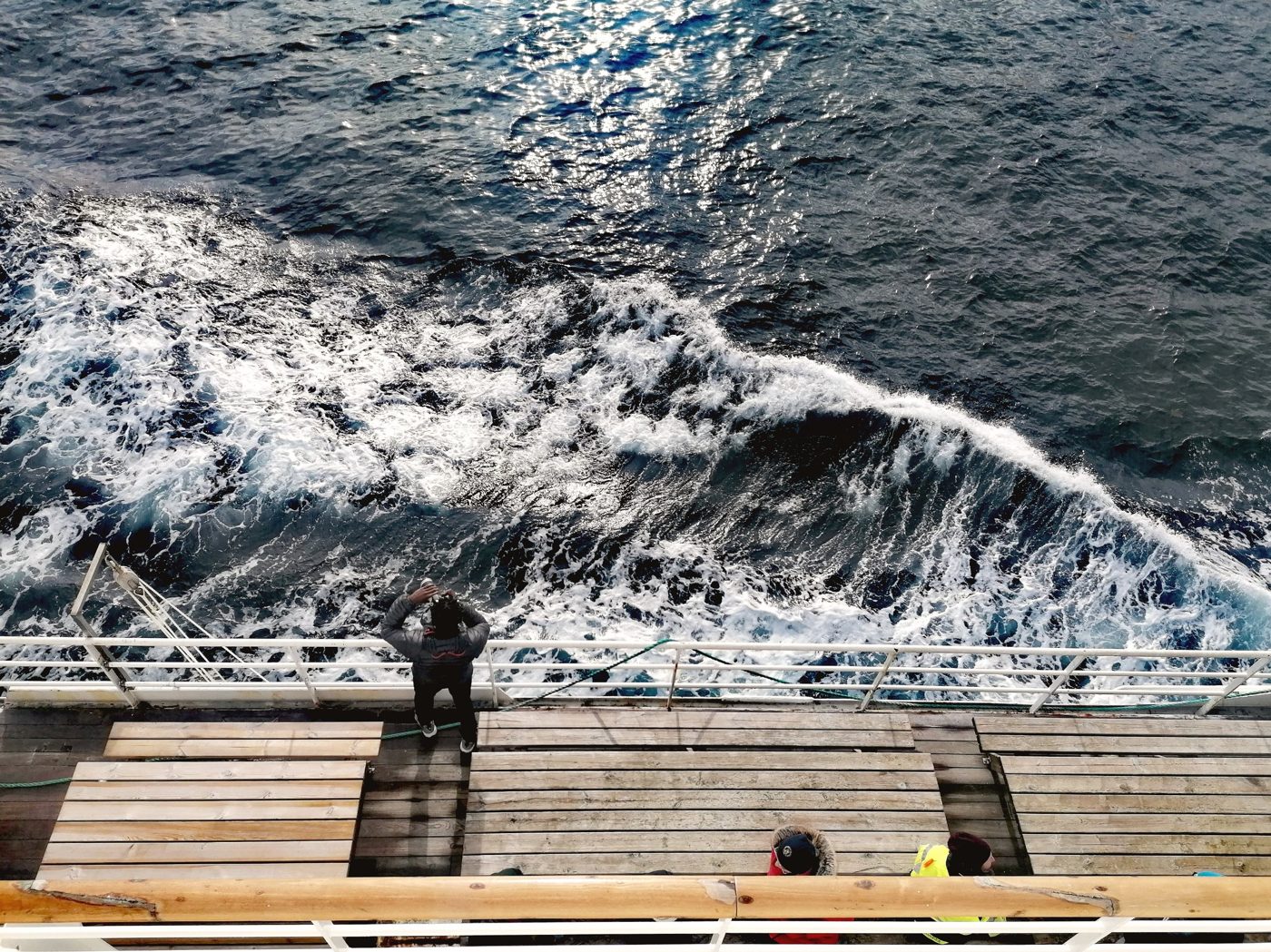
Looking down from an upper deck at a person photographing the ship wake
Watching the wake
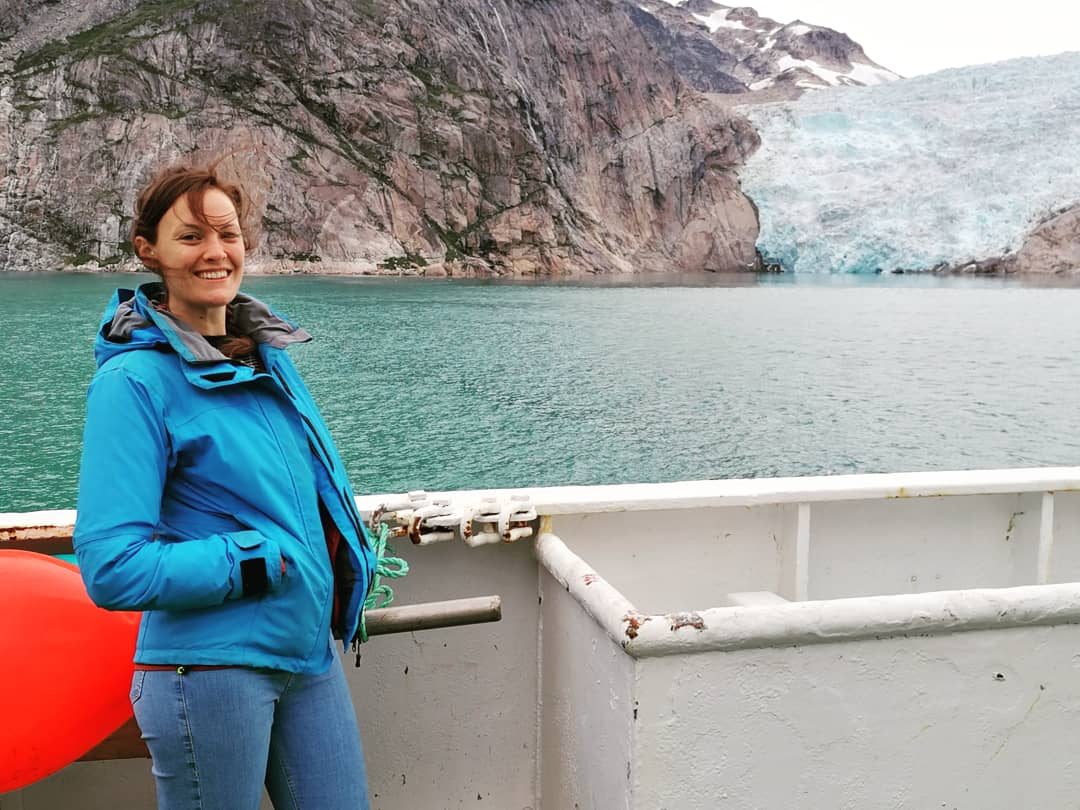
A researcher in a blue jacket at the ship rail with a glacier front and rock wall behind
At the glacier front
A flat-topped iceberg on still water in front of jagged, snow-patched mountains
Ice adrift in the fjord
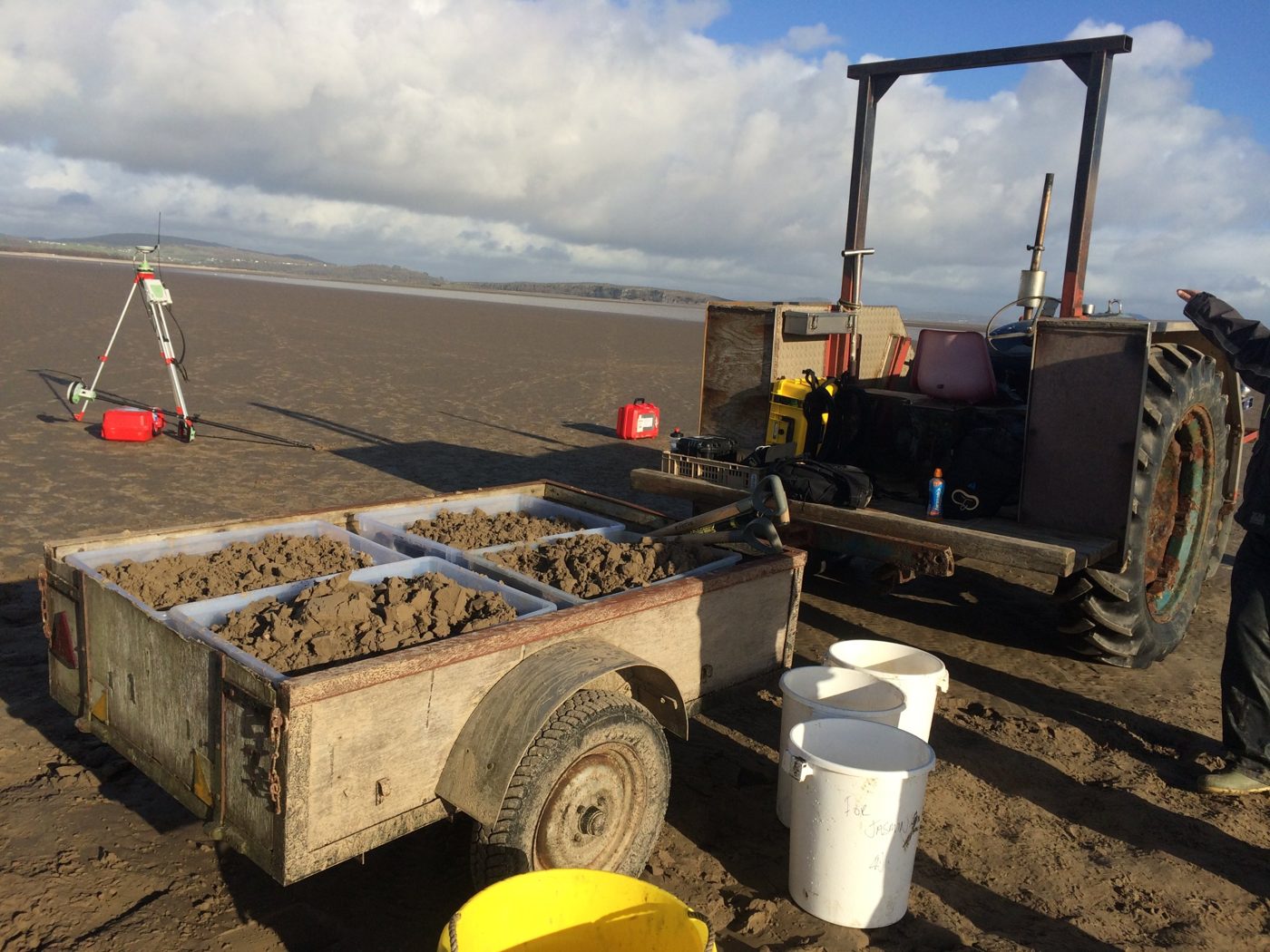
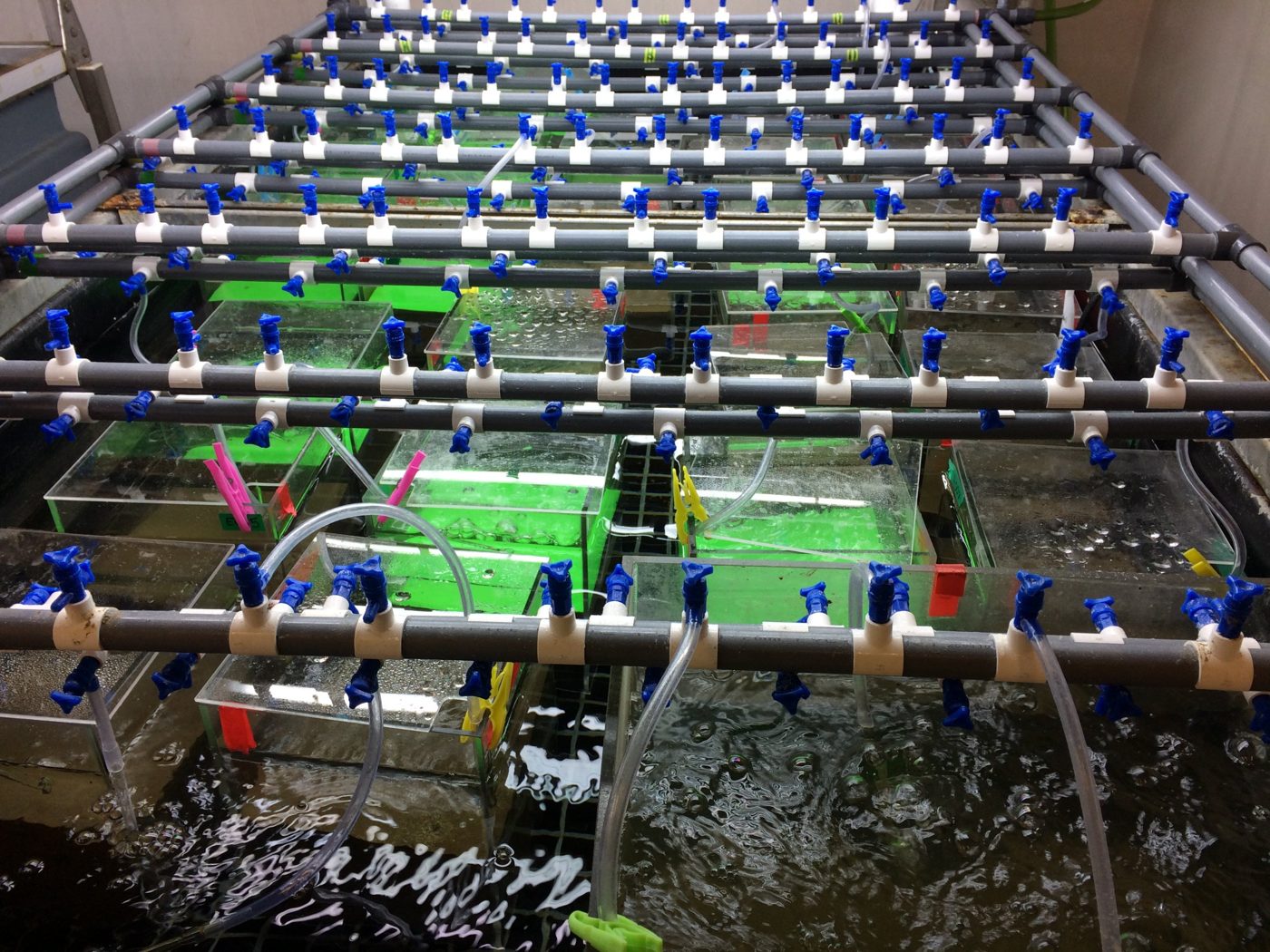
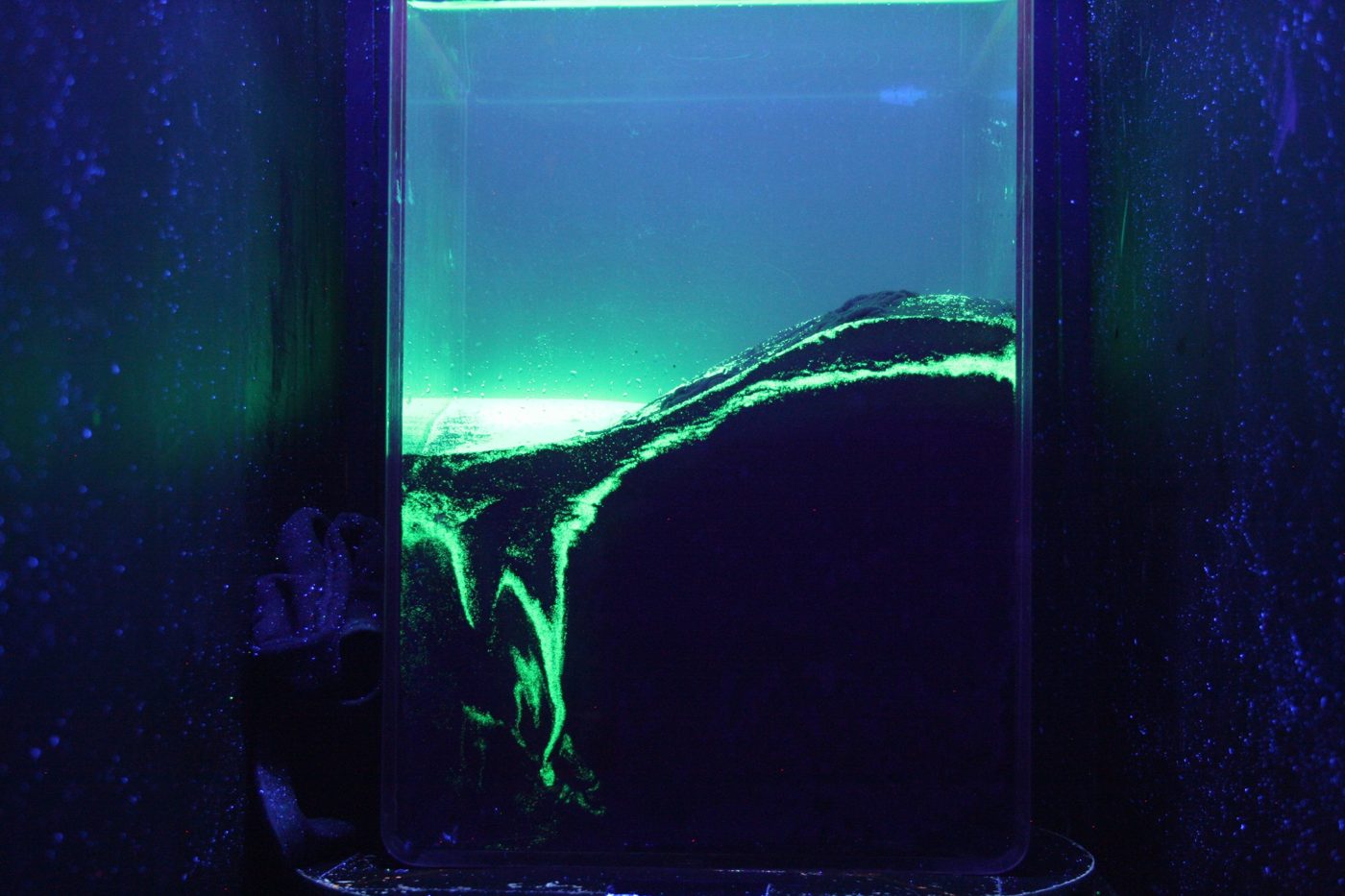
2016–19 Southampton, UK University of Southampton · BSc Marine Biology and Oceanography · lugworm (Arenicola marina) and sediment reworking
A tractor and trailer loaded with boxes of mud on a wide tidal flat, with survey equipment on a tripod
Collecting sediment on the mudflat
Rows of small glass tanks under a grid of pipes and blue valves, some glowing green
The mesocosm tanks
A thin glass tank under ultraviolet light, with glowing green tracer drawn down into dark sediment
Glowing tracer shows how worms mix the sediment
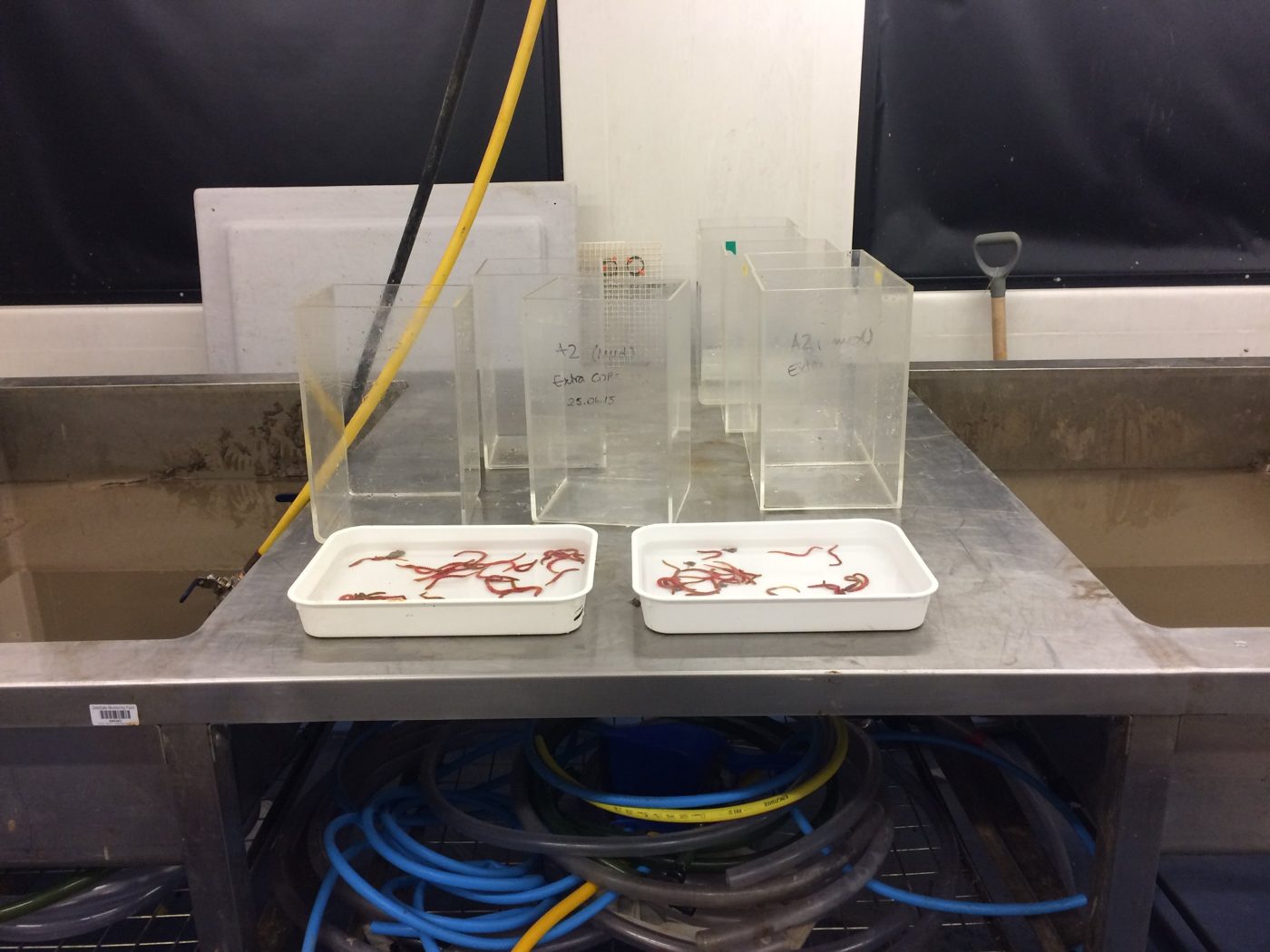
Two white trays of red worms on a steel bench in front of empty clear tanks
Worms ready for the tanks
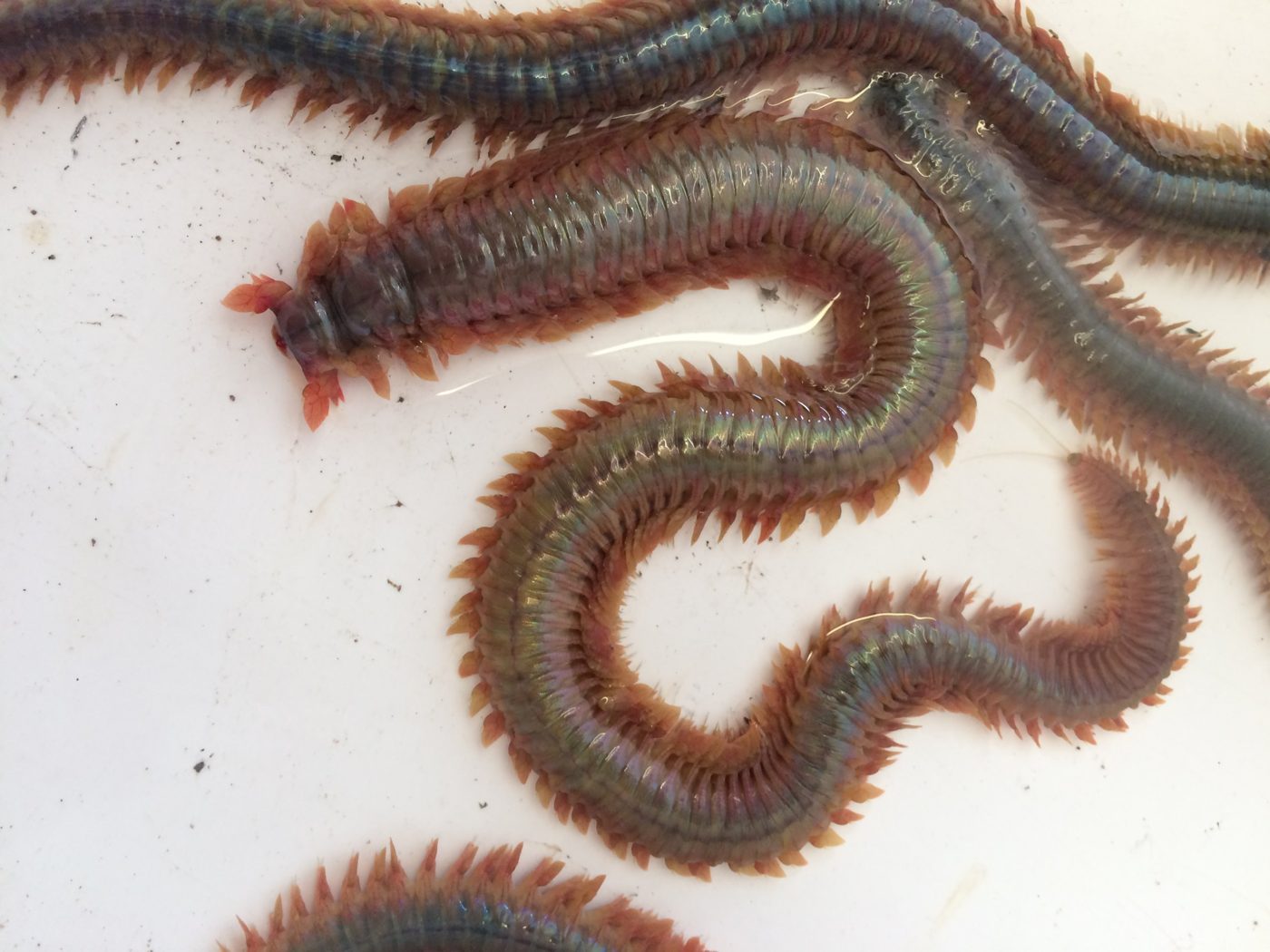
Close-up of large iridescent bristle worms in a white tray
Ragworms, close up
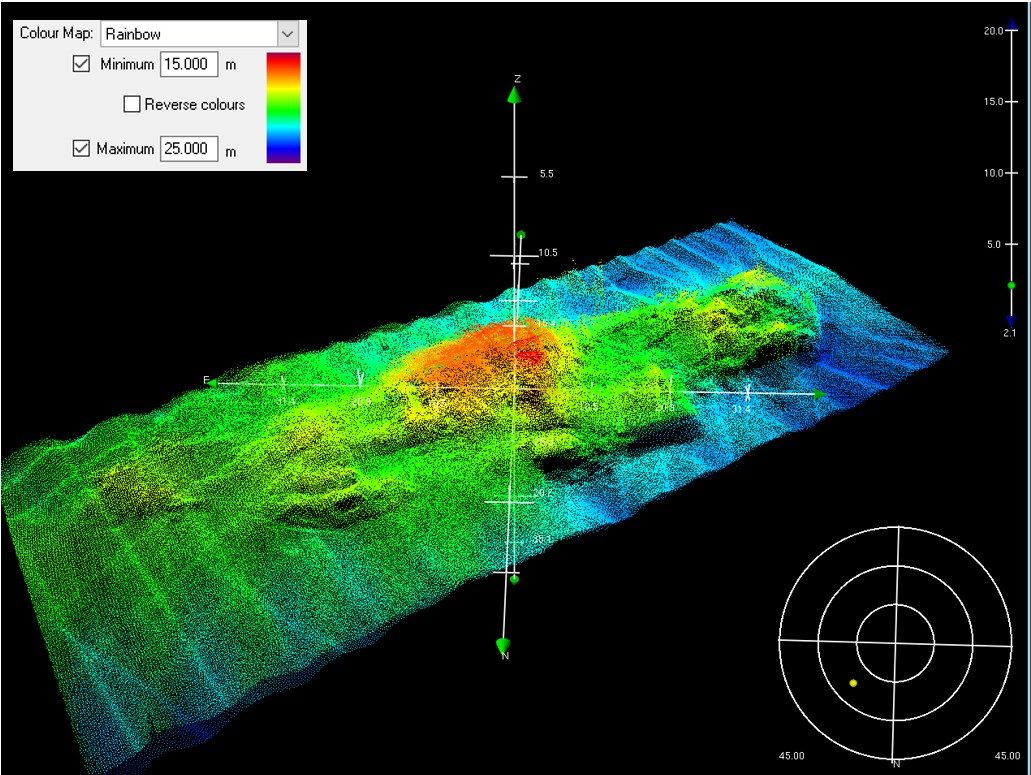
A colour-coded 3D sonar image of a wreck on the seabed, red at its shallowest and blue at its deepest
A wreck on the seabed, mapped by sonar
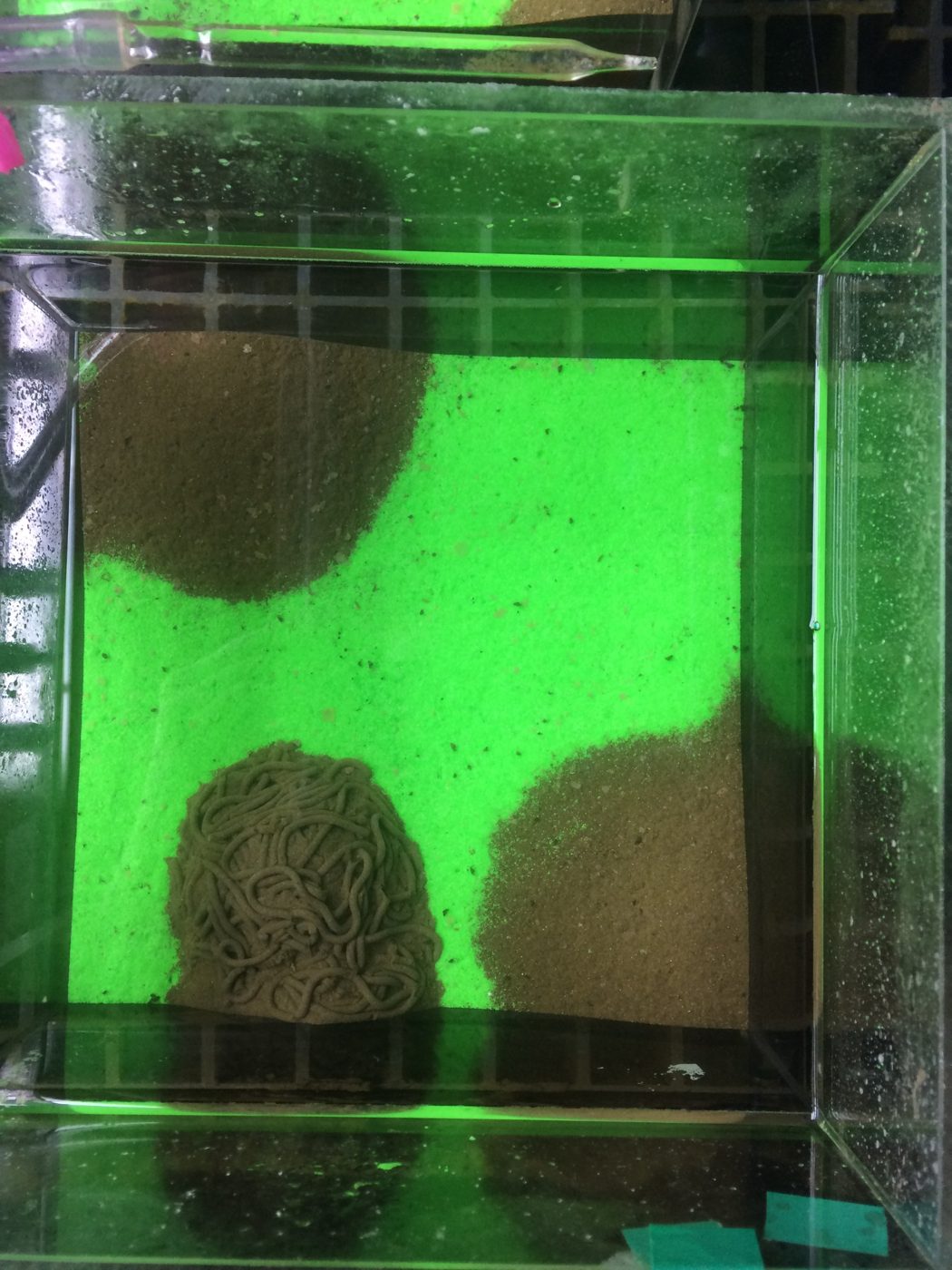
A coiled worm cast breaking through bright green tracer on the sediment surface of a tank
A lugworm cast breaks the tracer layer
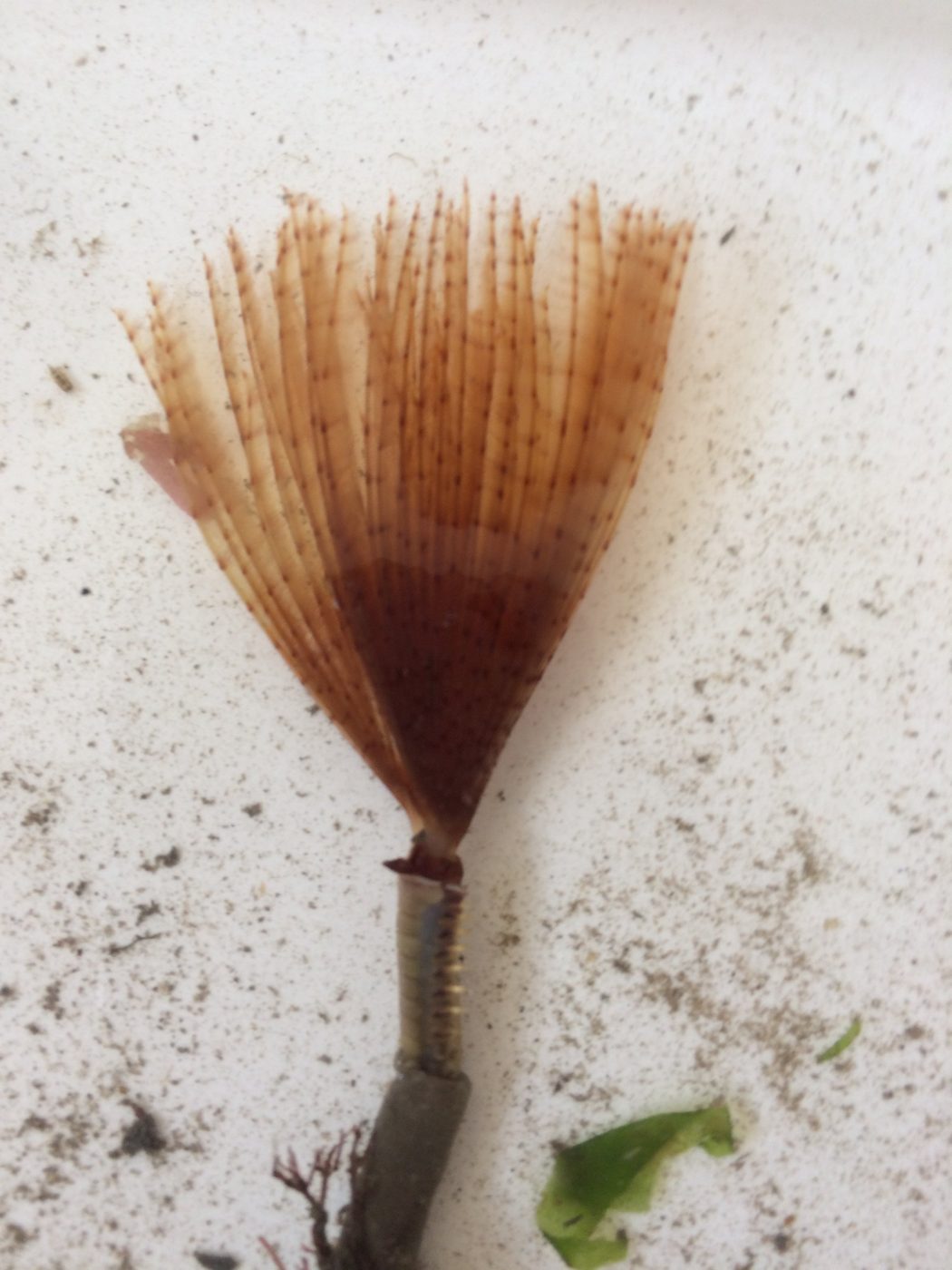
The orange-brown feathery crown of a fan worm spread out above its tube
A fan worm and its feeding crown
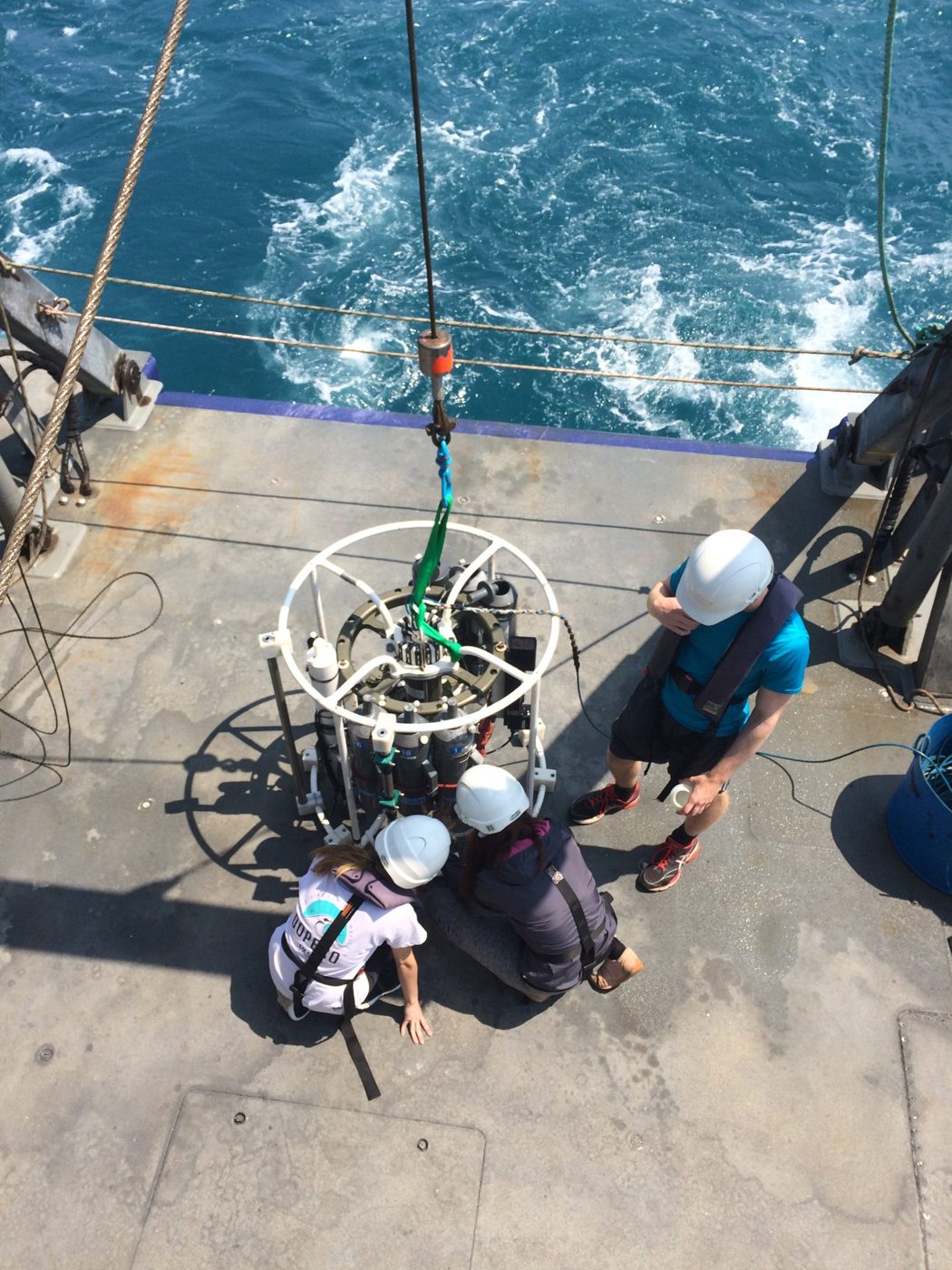
Three people in hard hats around a water-sampling rosette on a ship deck, seen from above
Water sampler back on deck
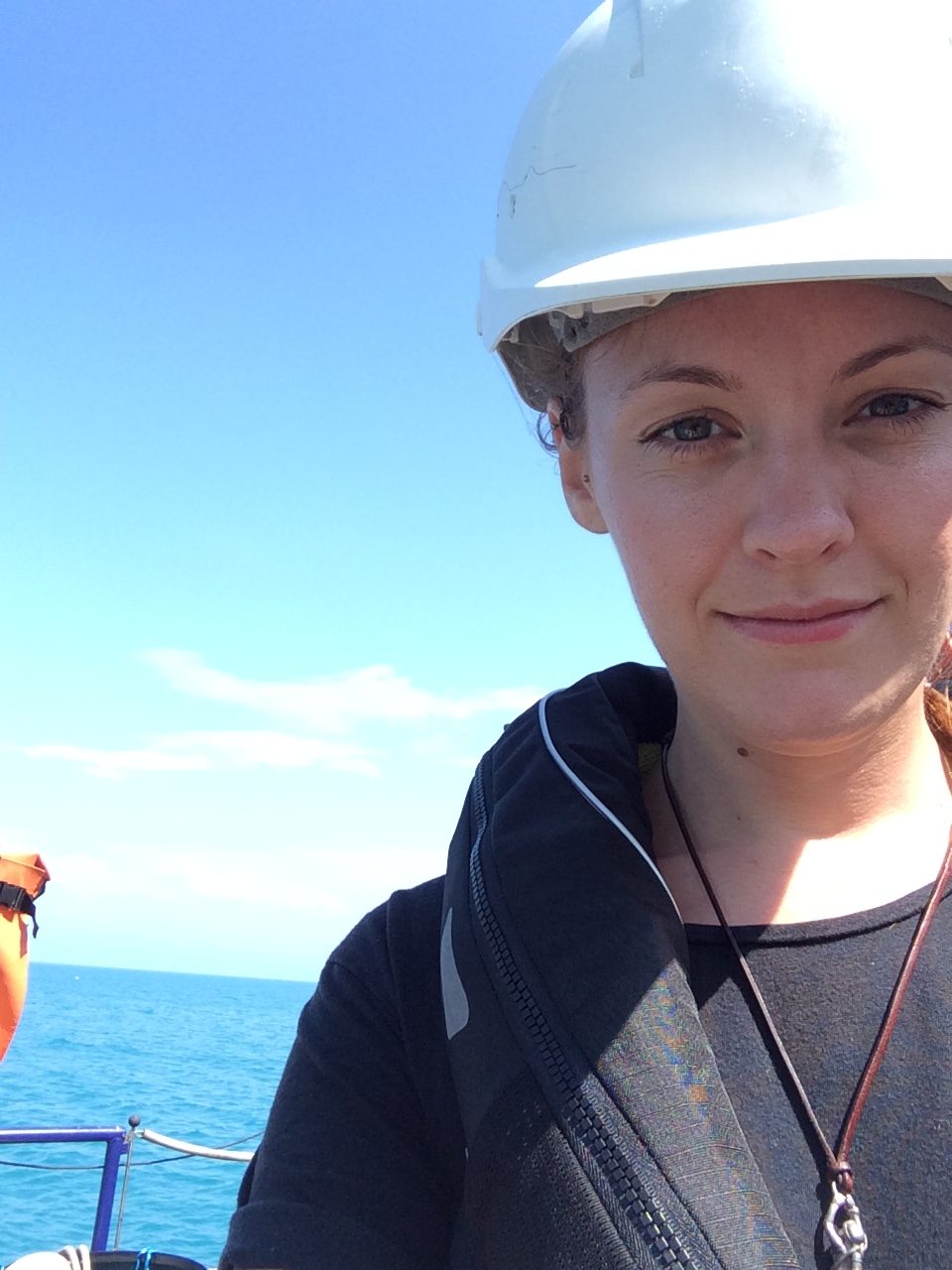
A researcher in a white hard hat and lifejacket at sea under a blue sky
At sea off the south coast
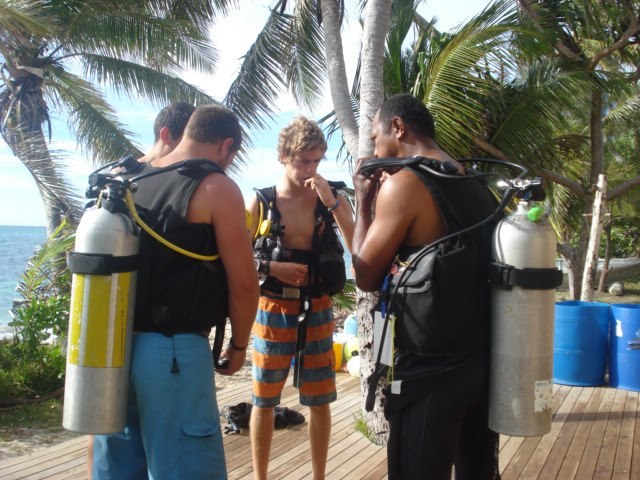
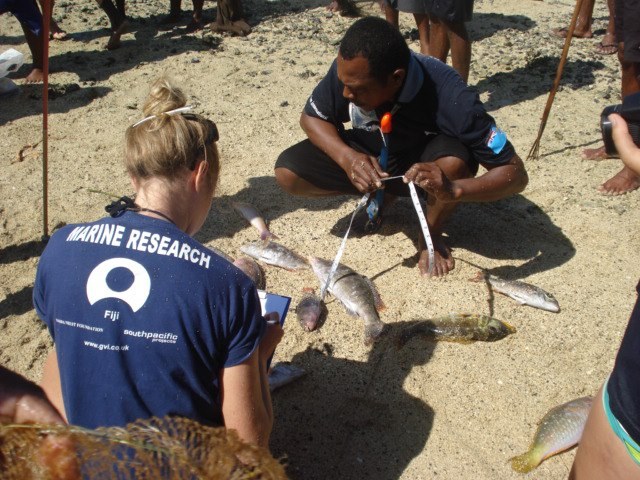
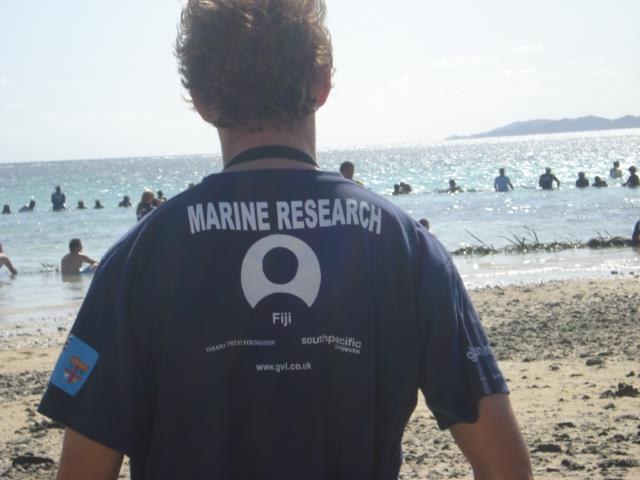
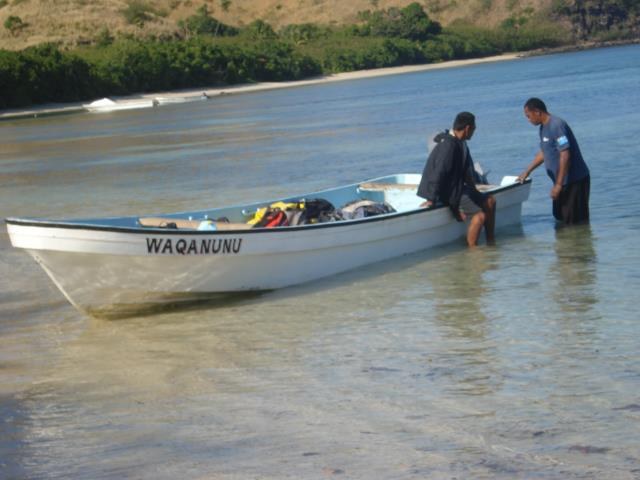
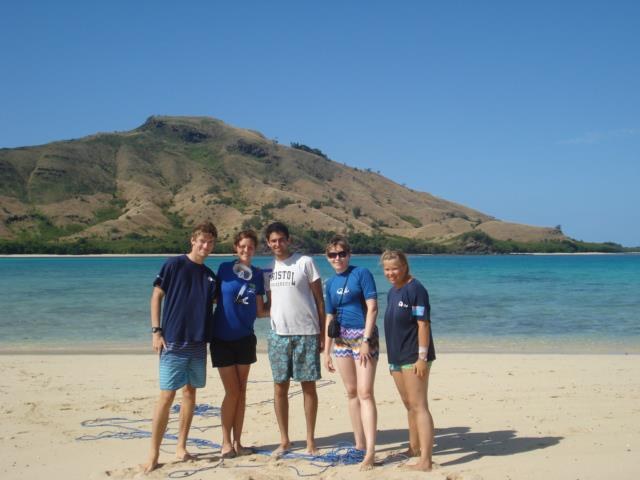
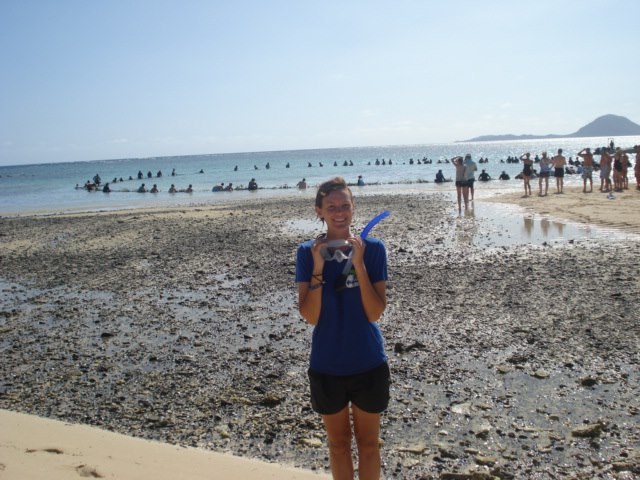
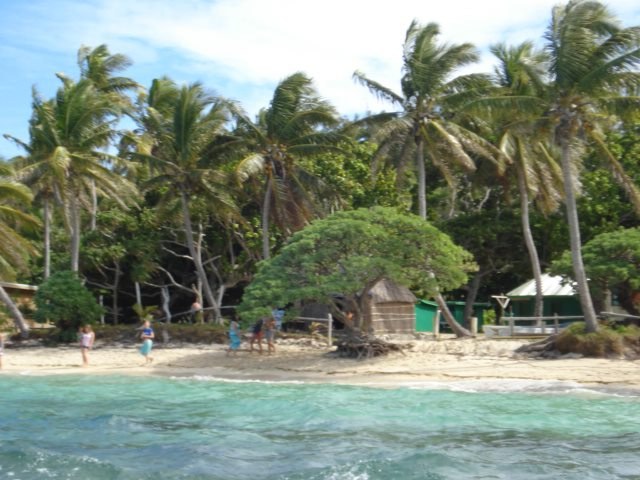
2012 Fiji GVI marine research programme · diving, coral reef and fish stock surveys
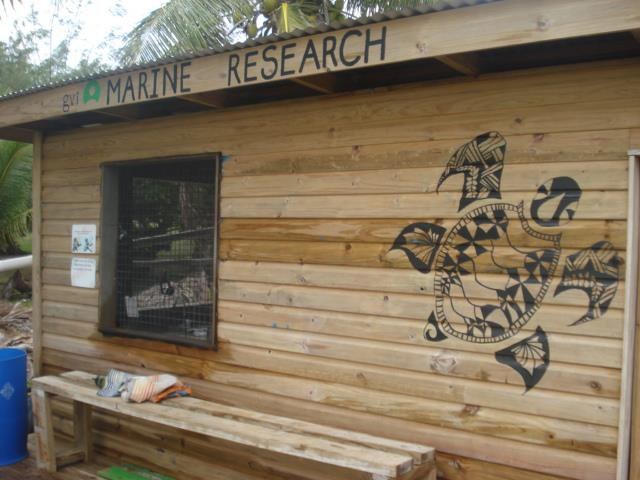
A wooden hut with a Marine Research sign and a turtle painted on its wall
The marine research hut
Divers in buoyancy jackets with air tanks checking their kit under palm trees
Kitting up for a dive
A man measuring fish laid on the sand with a tape while a researcher takes notes
Measuring fish on the beach
The back of a navy Marine Research Fiji T-shirt, with people wading in the sea beyond
Marine research, Fiji
Two men beside a small white boat named Waqanunu in clear shallow water
The boat, Waqanunu
Five people standing on a sandy beach with a green hill across the water
The team on the sandbar
A woman holding a mask and snorkel on a beach at low tide, a line of people in the water behind
Mask and snorkel at low tide
A palm-lined beach with thatched and wooden huts, seen from the water
The beach, seen from the boat

Where the work has taken me

SOUTH PACIFIC 123456789
University Research expedition Field station or programme Long-term data
  1. 1Åbo Akademi University, TurkuPhD and post-doctoral research · 2021 to now
  2. 2University of St AndrewsMSc Marine Ecosystem Management · 2019 to 2020
  3. 3University of SouthamptonBSc Marine Biology and Oceanography · 2016 to 2019
  4. 4SvalbardSEA-Quester cruise, R/V Oceania · 2024
  5. 5Northeast GreenlandECOTIP cruise, R/V Merian · 2022
  6. 6West GreenlandECOTIP cruise, R/V Dana · 2021
  7. 7ÅlandHusö Biological Station, Åbo Akademi University
  8. 8FijiGVI marine research programme · 2012
  9. 9Shetland IslandsSOTEAG long-term monitoring data · MSc thesis, 2020

05 · CV and contact

Let's talk about the seafloor.
Open to collaborations, student supervision, science communication, and social networking.
Download CV (PDF)

Career and education

2026 to nowPost-doctoral researcher, Åbo Akademi University, Finland
2021 to 2026PhD, Environmental and Marine Biology, Åbo Akademi University, Finland
2019 to 2020MSc, Marine Ecosystem Management, University of St Andrews, UK
2016 to 2019BSc, Marine Biology and Oceanography, University of Southampton, UK